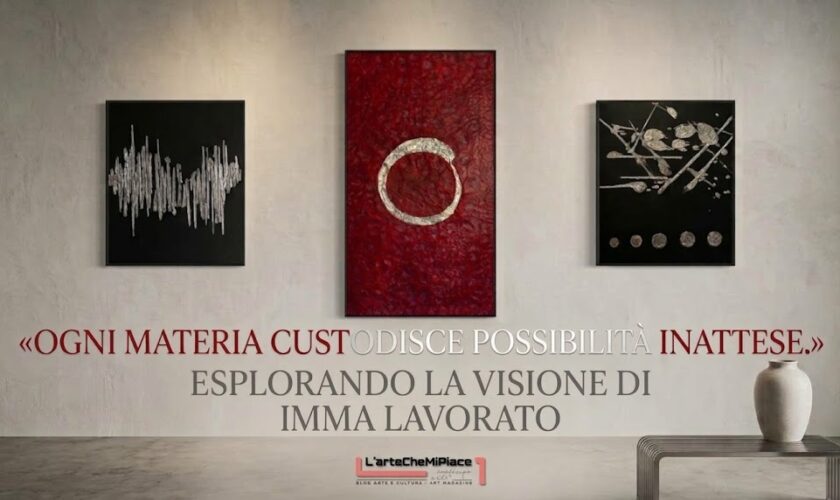
Il percorso di Imma Lavorato si sviluppa attorno a una ricerca che affida alla materia la possibilità di generare forme, relazioni e significati inattesi. Stagno, argilla e cartapesta entrano nel suo lavoro portando con sé qualità fisiche differenti e un patrimonio di esperienze personali che l’artista rielabora attraverso il gesto. Le origini familiari costituiscono il punto di partenza di questa indagine, senza limitarne gli sviluppi: ciò che appartiene al ricordo si trasforma in un linguaggio contemporaneo, capace di superare la dimensione autobiografica per aprirsi a una riflessione più ampia sulla fragilità, sulla resistenza e sul mutamento.
Nelle sue opere, la materia partecipa attivamente alla genesi della forma. L’argilla si ritira, si fessura, modifica la superficie; lo stagno scorre, si deposita e solidifica seguendo traiettorie che non sempre coincidono con l’intenzione iniziale. È proprio in questa relazione tra progetto e imprevedibilità che si definisce il carattere della sua ricerca. Lavorato interviene, orienta, compone, ma lascia spazio alle reazioni dei materiali, riconoscendo nelle loro trasformazioni una possibilità espressiva. Le fratture e le colate diventano così elementi di una scrittura visiva in cui il gesto umano incontra le leggi fisiche della materia.
Questa attenzione al processo accompagna anche il passaggio dalla tela allo spazio. Nelle sculture, nelle installazioni e nei progetti ambientali, l’opera si misura con condizioni differenti: la luce, il tempo, il movimento, la presenza di chi attraversa un luogo. Il percorso acquista una funzione che supera quella di semplice elemento compositivo e diventa esperienza percettiva, occasione per osservare lo spazio da prospettive diverse. Nei giardini, in particolare, la progettazione si confronta con una trasformazione che continua oltre l’intervento dell’artista, affidata anche ai ritmi della natura e alle variazioni dell’ambiente.
È in questa apertura all’imprevisto che la ricerca di Imma Lavorato trova una delle sue caratteristiche più riconoscibili. La forma non rappresenta un punto d’arrivo definitivo, ma il risultato provvisorio di una relazione tra materia, gesto e tempo. Ciò che appare sulla superficie o si manifesta nello spazio porta con sé il segno di un processo, rendendo percepibili trasformazioni che spesso avvengono senza essere direttamente osservate. L’opera diventa così un modo per interrogare ciò che si modifica, ciò che permane e ciò che si lascia intuire attraverso i propri effetti.
Ma quali passaggi hanno condotto l’artista a sviluppare questo linguaggio? E come si intrecciano le esperienze personali, la sperimentazione materica e la ricerca nello spazio? Lo scopriamo attraverso le parole di Imma Lavorato, in un’intervista che ripercorre le tappe del suo percorso e le direzioni della sua indagine artistica.
1.
Partirei dalla tua formazione. Prima di arrivare alla ricerca che oggi caratterizza il tuo lavoro, quali sono stati gli incontri, gli artisti o le esperienze che hanno contribuito maggiormente a definire il tuo modo di guardare e di fare arte? E da dove è iniziato il tuo percorso, da una dimensione figurativa, astratta o da una ricerca già orientata verso la materia?
Il mio percorso è iniziato dal figurativo. Gradualmente mi sono allontanata dalla rappresentazione riconoscibile, avvicinandomi a un linguaggio più libero e concentrandomi sulle forme e sulle possibilità espressive della materia. Durante gli studi all’Accademia di Belle Arti di Napoli mi ha affascinato soprattutto Burri, per la forza espressiva che riusciva a dare alla materia. La mia ricerca materica è cominciata con lo stagno, legato al ricordo degli stagnai che lucidavano le pentole di mia nonna. In seguito ho introdotto la cartapesta e, successivamente, l’argilla, che appartiene alla mia storia familiare e al lavoro di mio padre. Il mio linguaggio si è costruito così, attraverso la sperimentazione e il legame con le mie origini.
2.
Infatti lo stagno è diventato nel tempo una presenza molto riconoscibile della tua ricerca. Questa tua indagine materica, è legata al ricordo degli stagnini che lucidavano le pentole di tua nonna. Ti sei mai chiesta che cosa ti abbia realmente colpita allora di quel gesto, al punto da ritrovarlo molti anni dopo nel tuo lavoro?
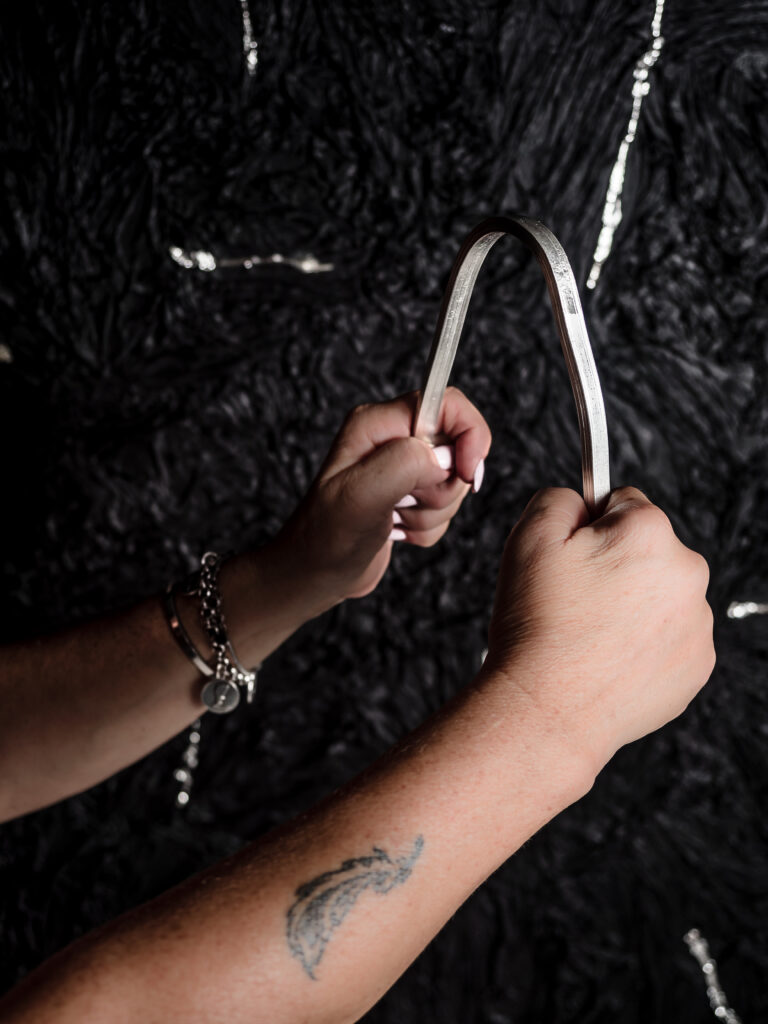
Credo che mi colpisse soprattutto la lucentezza dello stagno. Mi affascinava osservare gli stagnai mentre le pentole di mia nonna tornavano a brillare. Allora li guardavo con la curiosità di una bambina. In seguito ho riconosciuto quanto quel ricordo fosse rimasto dentro di me. Nel mio lavoro lo stagno ha trovato una forma diversa, ma conserva quel legame con la trasformazione e la memoria.
3.
Anche l’argilla porta con sé una componente autobiografica, legata alla figura di tuo padre e al luogo delle tue origini. Quando stagno e argilla si sono incontrati nella tua ricerca, hai percepito di aver messo insieme due parti diverse della tua storia? E che cosa hai scoperto di te attraverso questo incontro?
Sì, quando ho unito stagno e argilla ho sentito di mettere insieme due parti della mia storia: il ricordo degli stagnai che lucidavano le pentole di mia nonna e quello di mio padre, che utilizzava l’argilla per produrre laterizi. Attraverso questo incontro ho riconosciuto anche due aspetti di me: la fragilità e la forza. Entrambi convivono in me, e questi materiali mi permettono di esprimerli.
4.
Stagno, argilla e cartapesta sono materiali antichi, legati alla manualità e a gesti che appartengono a una tradizione artigianale. Che cosa ti offrono, sul piano artistico e anche personale, che difficilmente troveresti in materiali più industriali o tecnologici? È proprio la loro capacità di conservare una traccia del gesto a interessarti?
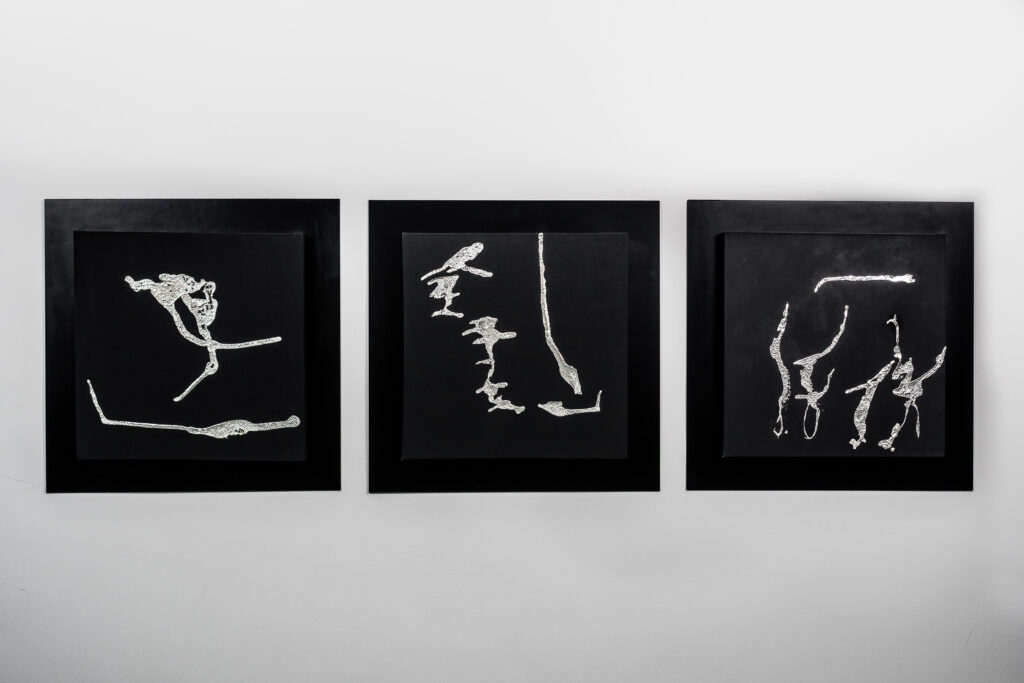
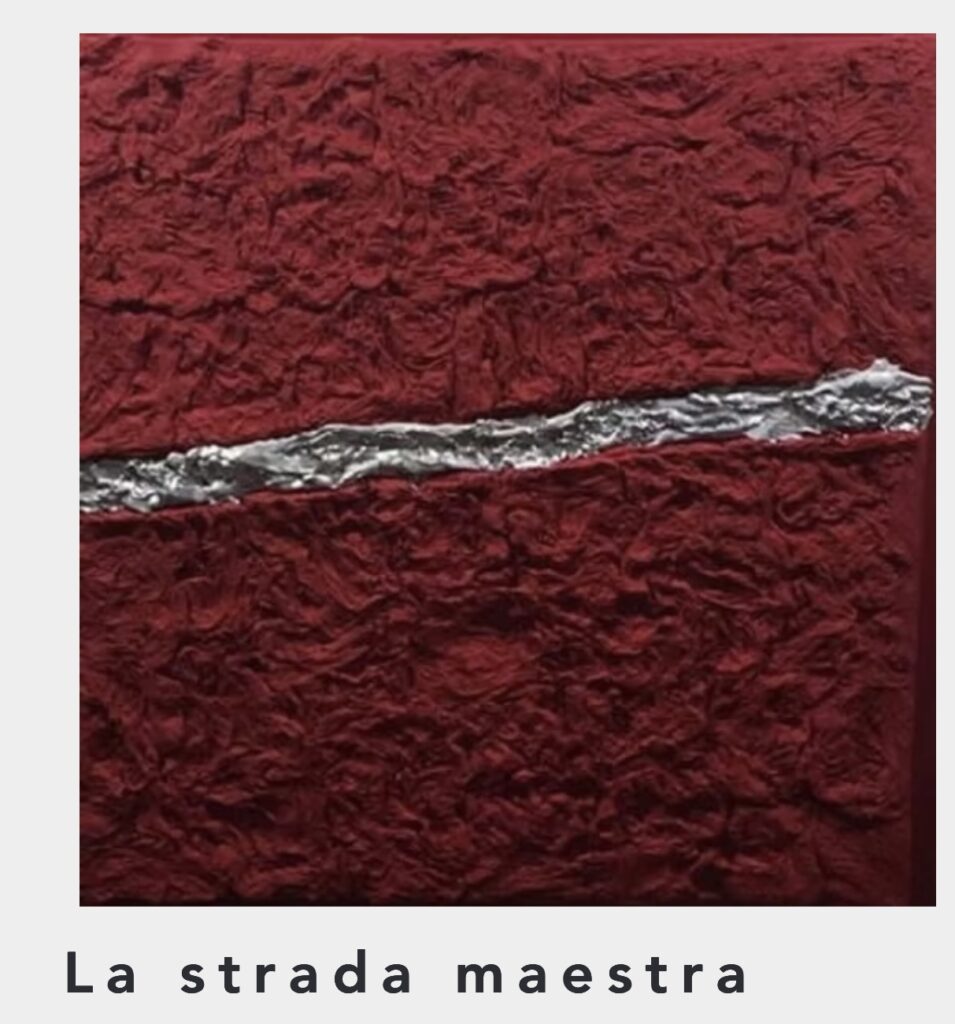
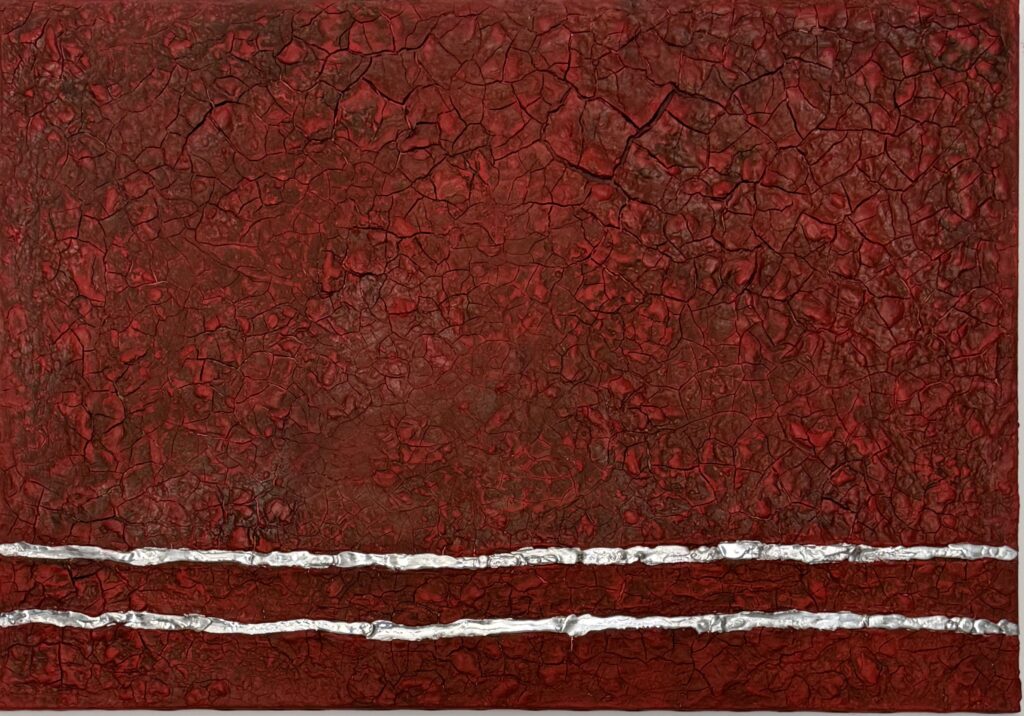
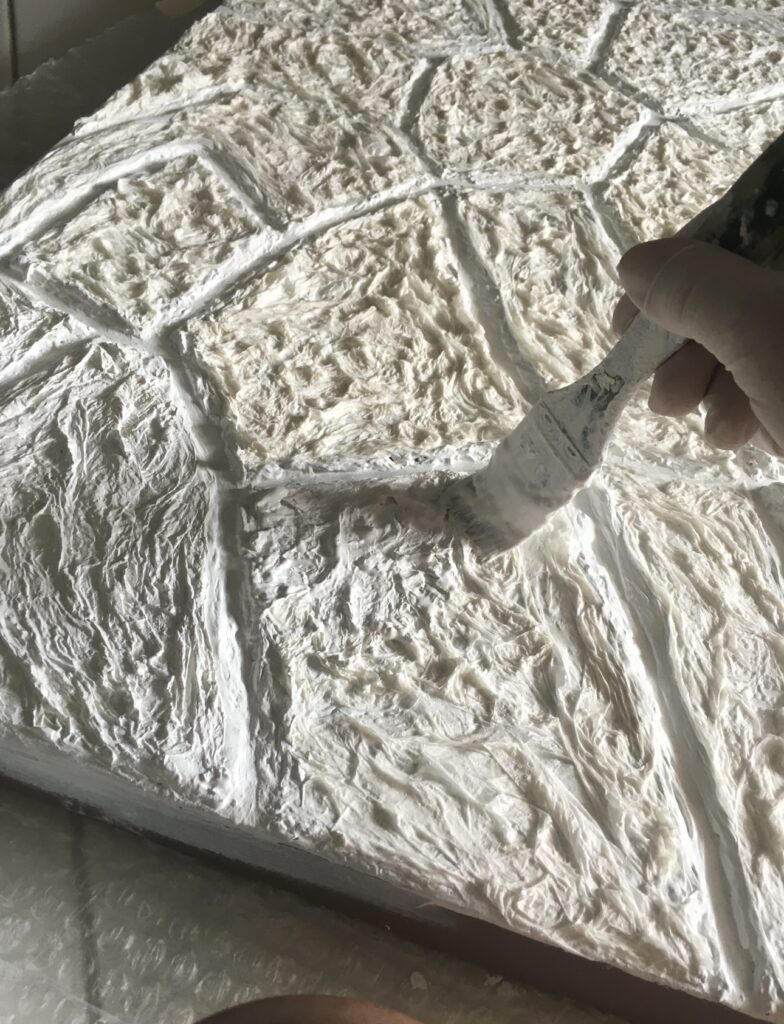
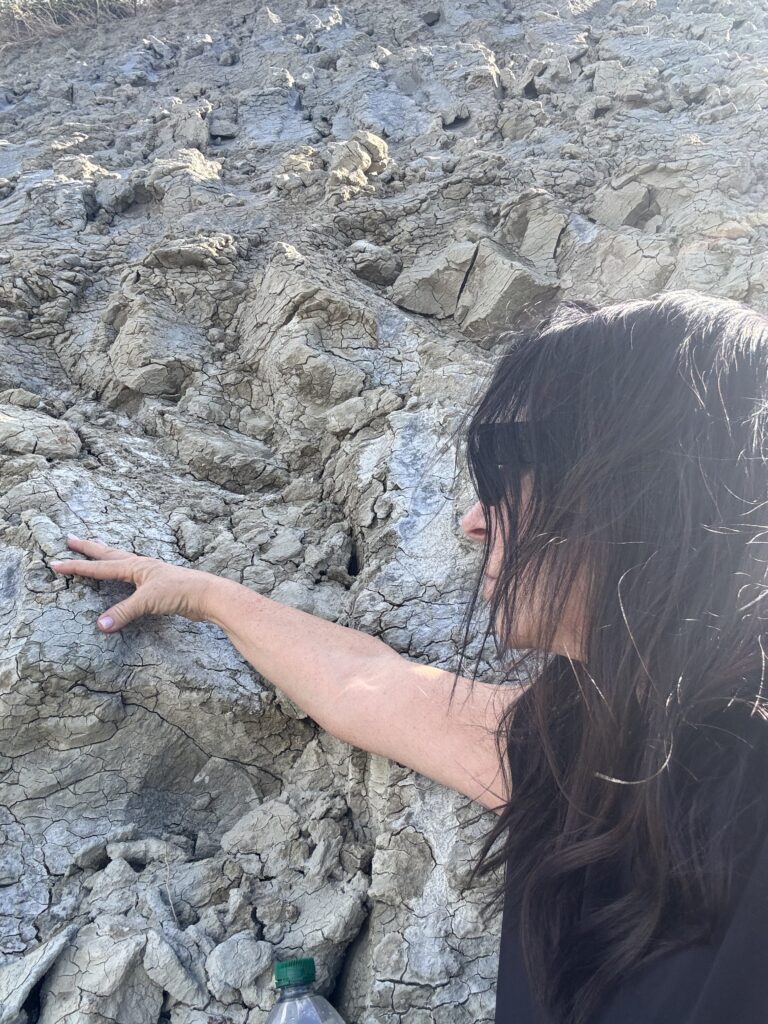
Sì, mi interessa la loro capacità di conservare la traccia del gesto, ma anche di trasformarsi mentre li lavoro. La cartapesta si lascia modellare, l’argilla si ritira e si fessura, lo stagno scorre e poi si solidifica. Ogni materiale reagisce in modo diverso e mi suggerisce nuove possibilità. Sul piano personale, il contatto diretto con questi materiali mi lega alla manualità e ai miei ricordi. Lavorandoli, seguo una mia idea, ma mi lascio anche guidare dalle forme che nascono e dalle trasformazioni che avvengono.
5.
Nel tuo lavoro c’è una relazione particolare tra controllo e imprevedibilità. Tu intervieni, orienti, guidi, ma poi lasci che sia la materia a suggerire parte del percorso: l’argilla si ritira e si frattura, lo stagno scorre, si accumula, cambia direzione. Quanto spazio concedi all’imprevisto e, al contrario, che cosa senti di dover necessariamente controllare?
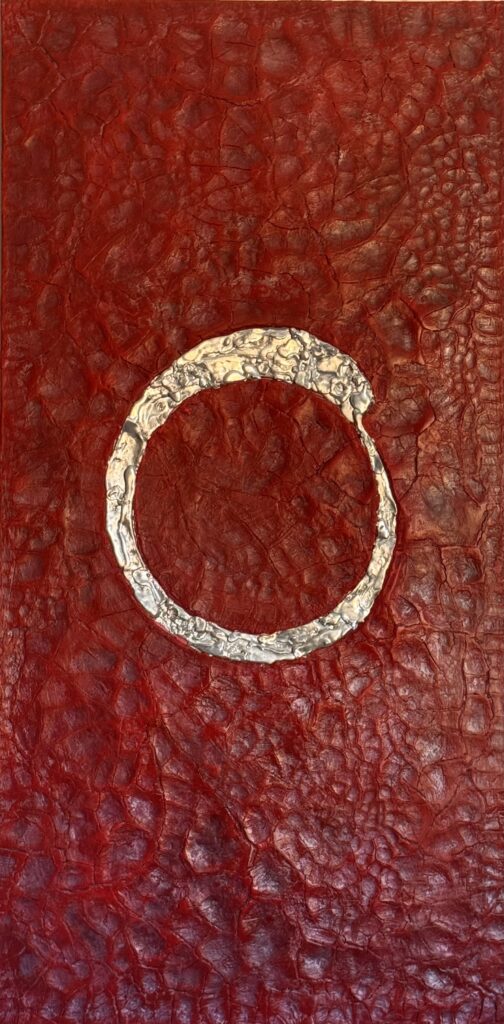
Lascio molto spazio all’imprevisto, perché spesso è proprio lì che trovo qualcosa di interessante. Parto da un’idea e guido il gesto, ma non cerco di prevedere ogni fessura dell’argilla o ogni movimento dello stagno. Controllo soprattutto la composizione e l’equilibrio tra le parti. Quando accade qualcosa di inatteso, mi fermo a osservare: a volte lo accolgo, altre volte intervengo. Mi interessa che l’opera possa sorprendermi, mantenendo un legame con ciò che voglio esprimere.
6.
Nella tua ricerca ritornano materiali, gesti e immagini legati a un passato concreto, ma senza trasformarsi in una semplice rievocazione. Come riesci a portare questi elementi nella contemporaneità senza perdere la loro origine? Ti interessa di più conservare una traccia della tradizione oppure trasformarla fino a farle assumere un significato nuovo?
Porto questi materiali nel presente usandoli in modo diverso da quello che ricordo: lo stagno delle pentole diventa un segno sulla tela, l’argilla dei laterizi una superficie che si trasforma. Mantengo il legame con la mia storia familiare, mentre le forme che creo esprimono ciò che sento oggi.
Mi interessa soprattutto dare un significato nuovo ai materiali e ai gesti della tradizione artigianale. Conservo il legame con le loro origini, ma li reinterpreto attraverso il mio linguaggio.
7.
Per molto tempo la tua ricerca si è concentrata sulla superficie della tela. Anche la scelta del formato quadrato e della superficie monocroma sembra attribuire al supporto un ruolo preciso, quasi fosse uno spazio da delimitare prima ancora che da abitare. Che rapporto hai oggi con il limite della tela? È ancora uno spazio necessario oppure, a un certo punto, hai sentito il bisogno di oltrepassarlo?
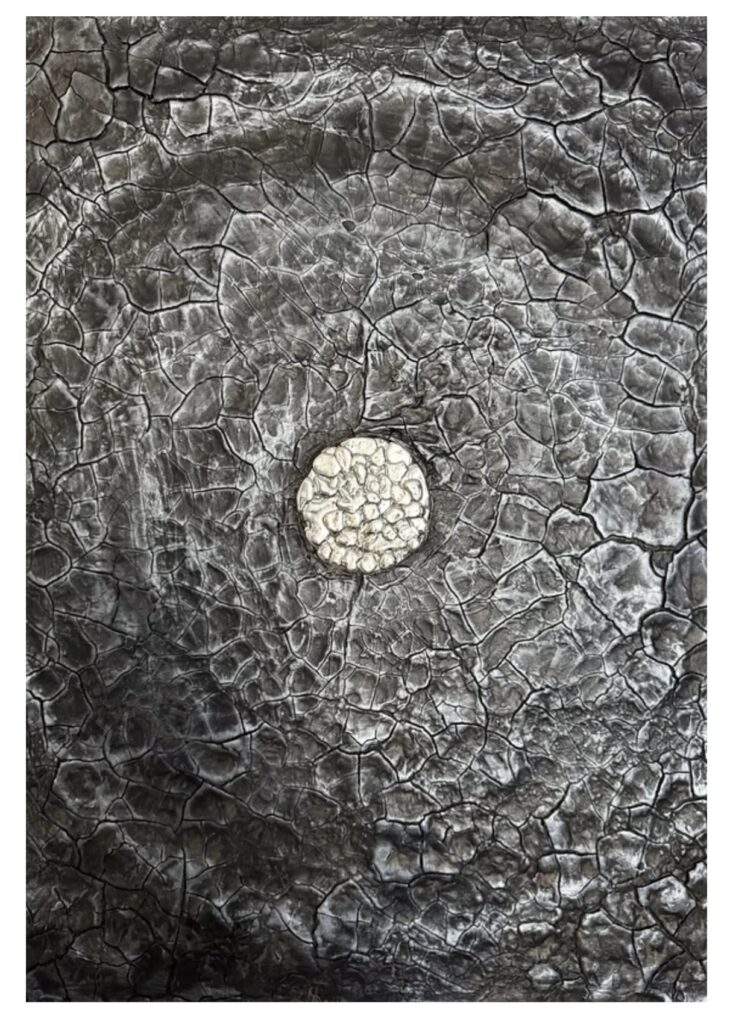
La tela resta uno spazio importante per me, ma oggi sento il bisogno di esplorare anche formati e dimensioni diversi. Continuo a usare il monocromo, ma introduco anche sfumature che dialogano con la materia. I confini della tela mi aiutano a dare equilibrio alla composizione, senza vincolarmi a un unico formato. Il desiderio di andare oltre la superficie si esprime anche nei miei progetti di installazione e di intervento nel paesaggio, dove posso esplorare il rapporto tra materia e spazio.
8.
Il passaggio dalla superficie della tela alla scultura, all’installazione, agli interventi ambientali e alla progettazione di giardini amplia radicalmente il campo della tua ricerca. Che cosa è cambiato nel tuo modo di pensare l’opera quando hai iniziato a confrontarti con uno spazio che non si limita a essere osservato, ma può essere attraversato, abitato e percepito fisicamente?
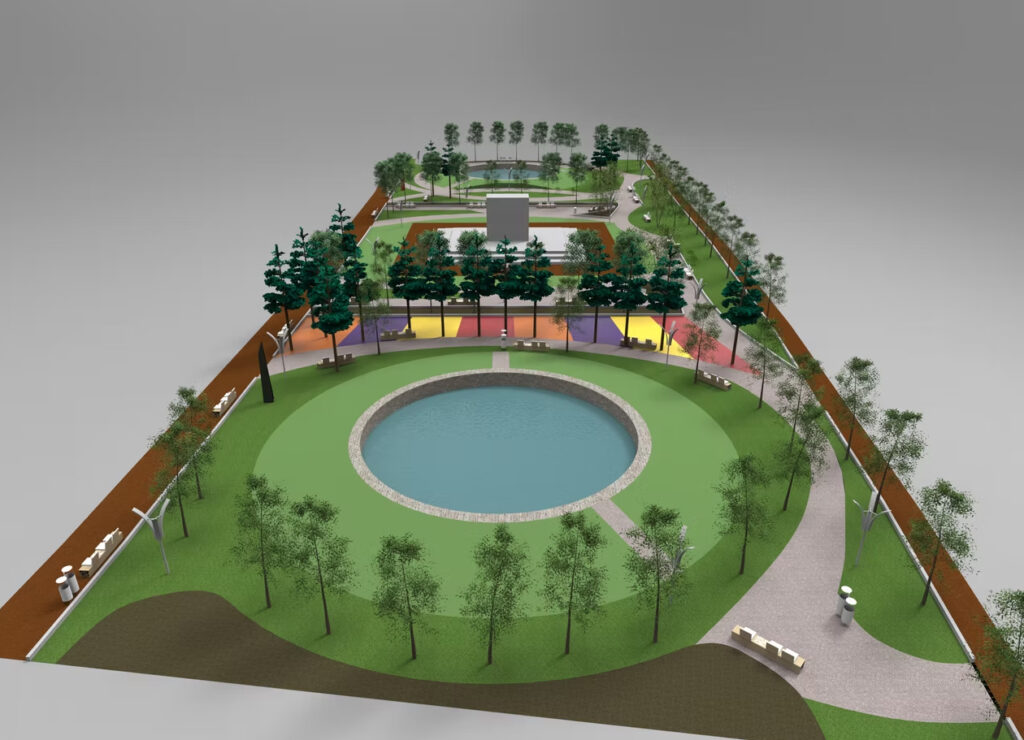
Ho iniziato a pensare l’opera anche in relazione al luogo e alle persone che lo attraversano. Sulla tela mi concentro sulla materia e sulla composizione; in uno spazio più ampio considero anche il movimento, le distanze e i diversi punti di vista. Mi interessa che chi entra possa avvicinarsi, fermarsi e scoprire qualcosa lungo il percorso. Nei progetti di giardini, anche la natura e il tempo partecipano alla trasformazione dell’opera.
9.
Il tema del percorso ritorna in forme molto diverse: può essere una linea tracciata dallo stagno, una frattura dell’argilla, un’ombra, un sentiero in un giardino. Ti interessa il percorso come forma oppure soprattutto per ciò che accade a chi lo attraversa? In altre parole, quando il percorso diventa esperienza, che cosa cambia nella tua idea di opera?
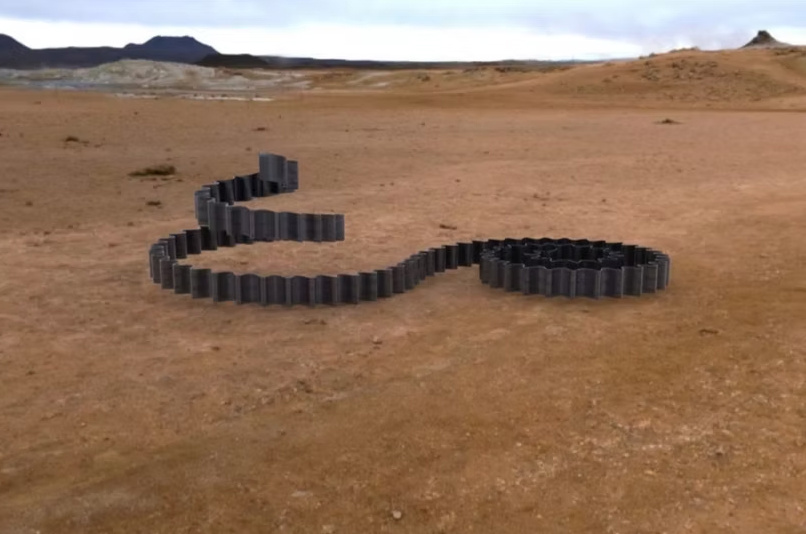
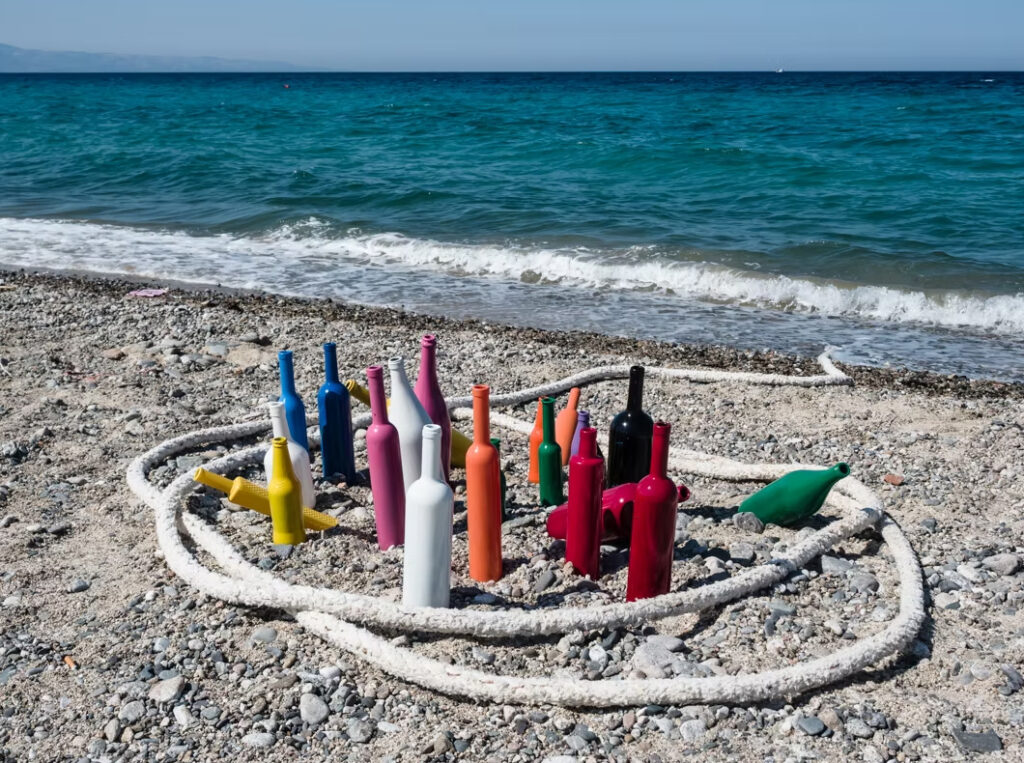
Mi interessa il percorso come forma, ma anche per ciò che può suscitare in chi lo segue. Sulla tela, una linea di stagno o una fessura dell’argilla invita lo sguardo a muoversi e a soffermarsi. In un giardino, quel movimento può coinvolgere tutto il corpo. In alcuni progetti, l’opera comprende anche il tempo della sosta, le sensazioni e le scoperte di chi la attraversa. La mia attenzione si amplia così dalla forma al rapporto tra l’opera e chi la vive.
10.
Nei tuoi progetti ambientali la possibilità di controllo si riduce ulteriormente: puoi progettare un luogo, stabilire un percorso o predisporre alcune condizioni, ma poi entrano in gioco la crescita delle piante, le stagioni, il vento, la luce e la presenza delle persone. È la stessa disponibilità all’imprevisto che sperimenti con la materia? E quanto è importante, per te, accettare che l’opera possa trasformarsi anche oltre le tue intenzioni iniziali?
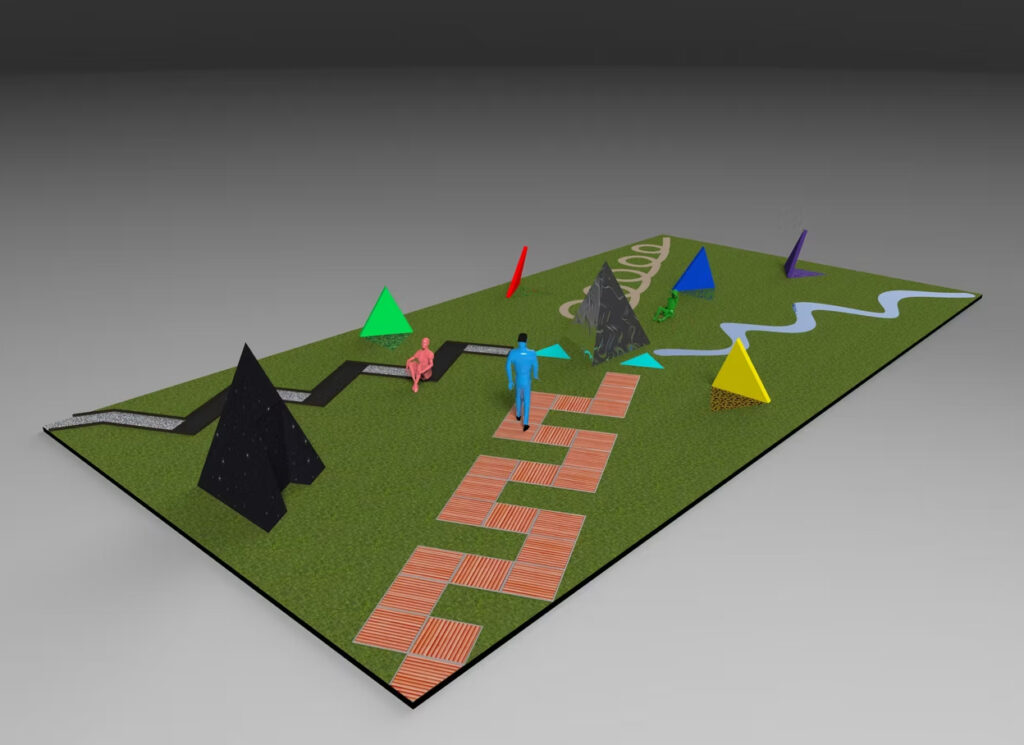
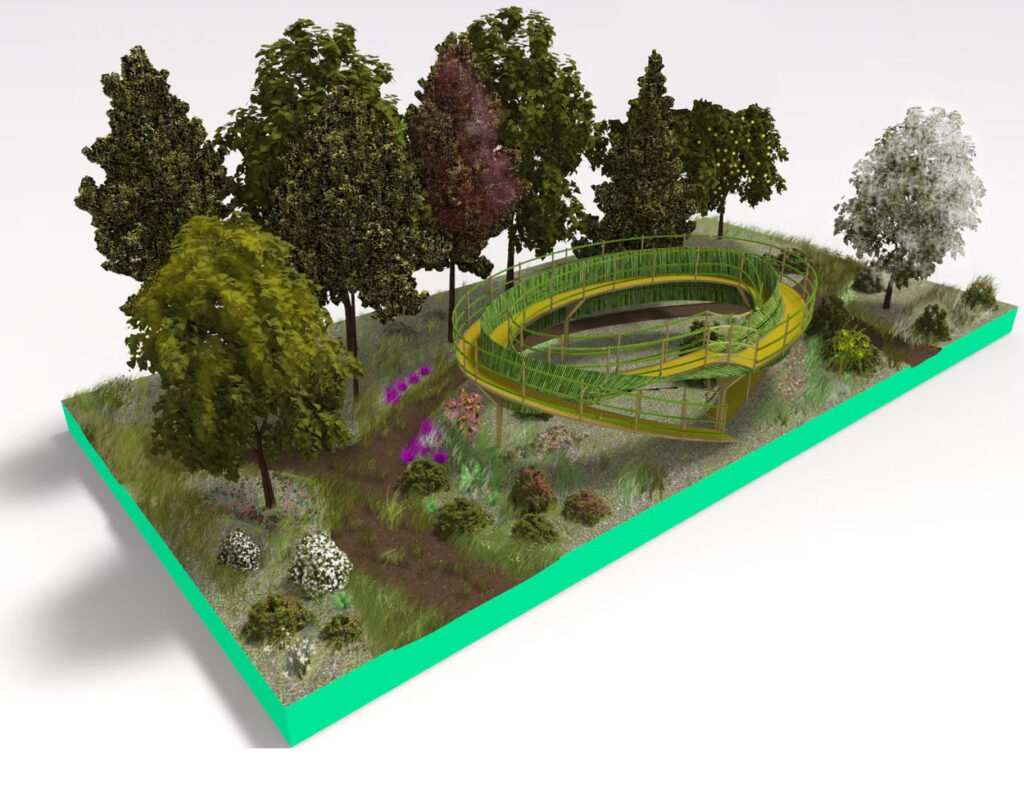
Sì, riconosco la stessa disponibilità all’imprevisto, ma nei progetti ambientali entrano in gioco più elementi e tempi diversi. Posso dare una direzione iniziale, poi la natura e la presenza delle persone contribuiscono a trasformare il luogo. Per me è importante accogliere questi cambiamenti, anche quando non li avevo previsti. Osservo ciò che accade e lascio che l’opera evolva. L’idea iniziale rimane un riferimento, ma può arricchirsi e assumere significati nuovi.
11.
C’è un filo che attraversa molte delle tue esperienze: il tempo, la trasformazione, il percorso, la percezione, la traccia e ciò che resta invisibile ma può essere avvertito attraverso i suoi effetti. Pensi che tela, scultura, installazione e paesaggio siano davvero linguaggi diversi, oppure sono per te modi differenti di affrontare una stessa ricerca?
Per me sono modi diversi di portare avanti una stessa ricerca. Cambiano le dimensioni, i materiali e il rapporto con lo spazio, ma ritornano il tempo, la memoria e la trasformazione. Sulla tela questi temi emergono in una fessura dell’argilla o in una colata di stagno; nel paesaggio, attraverso i cambiamenti della natura. Mi interessa ciò che questi segni rendono percepibile: il tempo trascorso, un gesto, una presenza. Ogni linguaggio mi permette di esplorare un aspetto diverso di ciò che cerco.
12.
In una delle direzioni più recenti del tuo lavoro emerge l’interesse per ciò che non possiamo vedere direttamente, ma che riconosciamo attraverso un’impronta: una forza, un’energia, una trasformazione, un passaggio. Guardando al tuo percorso fino a oggi, c’è qualcosa che senti di voler ancora rendere visibile attraverso la materia e lo spazio?
Vorrei rendere visibili gli effetti del tempo e delle forze che trasformano la materia. I segni che restano ci permettono di intuire qualcosa che è accaduto, anche se non lo abbiamo visto. Mi interessa approfondire questa possibilità, nella materia e nello spazio: lasciare che i segni raccontino anche ciò che rimane nascosto.
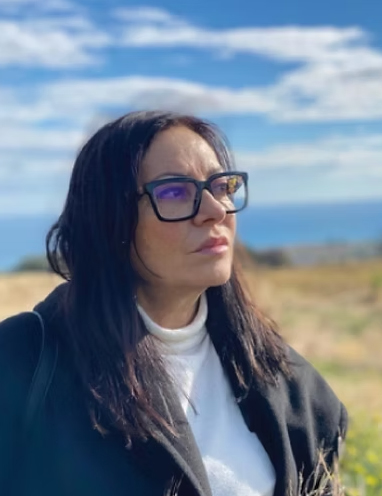
Lavorato Imma, nasce a San Demetrio Corone. Si diploma presso l’Istituto Magistrale. Dal 1997 insegna presso la scuola dell’Infanzia Statale. Nel 2019 consegue la Laurea di I Livello in Decorazione presso l’Accademia delle Belle Arti di Napoli. Nel 2022 consegue la Laurea di II Livello in Decorazione presso l’Accademia di Belle Arti di Napoli.
Tra le esperienze professionali più significative la vediamo attiva nei Workshop: “Presentarsi nel Sistema dell’Arte (12-05-2020/ 25-05-2020); “Time 0.3” (01-04-2020/06-09-2020); “Arte come disabitare viaggio tra beni e monumenti” (2021/22) “Dinamiche seriali” (2021/22); “Tra metodo e progettazione” (2021/22); “Arte come decolonizzare tra pratiche museali e quotidiano infraordinario” (2021/22); “Arte e pedagogia” (2021/22); “Influencer marketing” (2021/22);
L’artista partecipa a numerose esposizioni e concorsi: Lo stato dell’Arte al tempo della Biennale di Venezia a cura di Giorgio Grasso (10- 8-2019/10-10-2019); Expo – MI- Città metropolitana a cura di Giorgio Grasso (5-2015) Museo MACA, Acri (CS) Esposizione di Arte Contemporanea Italiana (Gennaio 2019); partecipa alla Rassegna dell’Artes Maximae Friederich II Hohenstaunfen; Esposizione di Arte Contemporanea Castello Normanno Svevo di Cosenza (Settembre 2019);
Premio internazionale d’Arte Contemporanea “Arte senza confini ”(2022); “Gli artisti calabresi per la Shoah” Museo dei Bretti e degli Enotri Cosenza (2023); Concorso Candidatura Orticolario (2024) Villa Erba sul Lago di Como; Festival International de Jardins 2024 (Canada); (Pubblicazione del progetto); Festival International de Jardins 2023 (Canada); (Pubblicazione del progetto); Festival International de Jardins 2022 (Canada); (Pubblicazione del progetto); Partecipa con una sua Installazione alla riqualificazione attraverso l’arte contemporanea del reparto di Ematologia Oncologica della Fondazione G. Pascale di Napoli; Partecipa sempre attraverso una sua Installazione alla riqualificazione urbana di Via Caracciolo a Napoli (2019);
Progetto di riqualificazione urbana della città partenopea realizza Progetto per un Murales (2019); Tra le sue creazioni troviamo ” Seduta Outdoor” (2016); ” I migranti” Installazione (2019) Viene selezionata con tre opere per partecipare alla 30′ edizione del Premio Nazionale “Pandosia” di Marano Principato (CS) a cura di Alessandra Carelli (2019); Alcune sue opere vengono selezionate per la Galleria SpazioArte57 di Lamezia Terme (2019);
Diverse pubblicazioni su libri di arte: Protagonisti delle nuove Avanguardie, EA Editori ( 2013) Protagonisti dell’arte dal XIX secolo ad oggi , a cura di Paolo Levi Leaders (2014);
CATALOGHI
Il Codice che non c’è (2016); Quadriennale dell’arte contemporanea a cura di Gianfranco Pugliese (2019); Arte expo a cura di Gianfranco Pugliese( 2018); Catalogo Premio Pandosia a cura di Alessandra Carelli (2019);
PREMI
Arte senza confini: Primo premio tecnica mista (2022); Premio Galarte XXIV Edizione (2022);
Arte senza confini: Primo premio arte astratta (2023/2024)
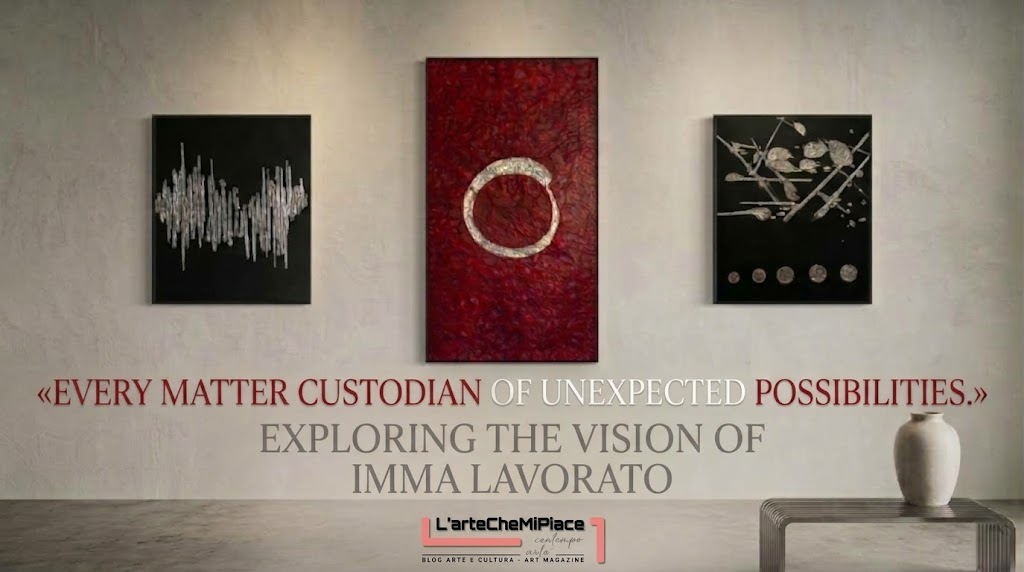
The artistic journey of Imma Lavorato revolves around an exploration that gives matter the potential to generate unexpected forms, relationships and meanings. Tin, clay and papier-mâché enter her work, each bringing distinct physical properties and a wealth of personal experiences that the artist reinterprets through gesture. Her family background provides the starting point for this exploration without confining its development: what belongs to memory is transformed into a contemporary visual language that moves beyond autobiography to embrace a broader reflection on fragility, resilience and change.
In her work, matter plays an active role in the genesis of form. Clay shrinks, cracks and alters the surface; tin flows, settles and solidifies, following paths that do not always coincide with the artist’s initial intentions. It is precisely through this relationship between intention and unpredictability that the distinctive character of her practice emerges. Lavorato intervenes, directs and composes, while leaving room for the materials to respond, recognising their transformations as a source of expressive possibility. Cracks and flowing deposits thus become elements of a visual language in which human gesture encounters the physical laws of matter.
This attention to process also informs the transition from the canvas to space. In her sculptures, installations and environmental projects, the work engages with different conditions: light, time, movement and the presence of those who move through a place. The path takes on a role that extends beyond that of a simple compositional element, becoming a perceptual experience and an opportunity to observe space from different perspectives. In gardens, in particular, the design process engages with a transformation that continues beyond the artist’s intervention, shaped also by the rhythms of nature and changes in the surrounding environment.
It is in this openness to the unexpected that one of the most distinctive features of Imma Lavorato’s practice emerges. Form is not a definitive endpoint, but the provisional outcome of a relationship between matter, gesture and time. What appears on a surface or takes shape in space bears the traces of a process, making perceptible transformations that often occur without being directly observed. The artwork thus becomes a means of exploring what changes, what endures and what can be intuited through its effects.
But what stages led the artist to develop this distinctive language? And how do personal experiences, material experimentation and her exploration of space intertwine? We discover this through the words of Imma Lavorato, in an interview that retraces the key moments of her artistic journey and explores the evolving directions of her practice.
- I would like to begin with your artistic education. Before developing the practice that defines your work today, which encounters, artists or experiences contributed most to shaping the way you see and make art? Where did your journey begin: with figurative art, abstraction, or an approach already oriented towards materials?
My artistic journey began with figurative art. Gradually, I moved away from recognisable representation, embracing a freer language and focusing on forms and the expressive possibilities of materials. During my studies at the Academy of Fine Arts in Naples, I was particularly fascinated by Alberto Burri and the expressive power he was able to draw from matter. My exploration of materials began with tin, connected to my childhood memories of the tinsmiths who polished my grandmother’s pots. I later introduced papier-mâché and, subsequently, clay, which is part of my family history and my father’s work. My artistic language developed in this way, through experimentation and a connection with my origins.
- Over time, tin has become a distinctive presence in your artistic practice. There is a particular story behind it: everything began with a childhood memory of the tinsmiths who worked on your grandparents’ pots. Have you ever wondered what it was about that gesture that first captivated you, to the point that you would return to it many years later in your own work?
I believe what struck me most was the shine of the tin. I was fascinated by watching the tinsmiths as my grandmother’s pots regained their lustre. At the time, I watched them with the curiosity of a child. Later, I came to realise how deeply that memory had remained within me. In my work, tin has taken on a different form, yet it retains that connection with transformation and memory.
- Clay also carries an autobiographical dimension, linked to your father and the place where your story began. When tin and clay came together in your practice, did you feel that you were bringing two different parts of your personal history into dialogue? And what did you discover about yourself through this encounter?
Yes. When I brought tin and clay together, I felt I was combining two parts of my history: the memory of the tinsmiths polishing my grandmother’s pots and that of my father, who used clay to manufacture bricks and other building materials. Through this encounter, I also recognised two aspects of myself: fragility and strength. Both coexist within me, and these materials allow me to express them.
- Tin, clay and papier-mâché are traditional materials associated with manual craftsmanship and gestures rooted in artisanal practices. What do they offer you, both artistically and personally, that you might find difficult to achieve with more industrial or technological materials? Is it precisely their ability to retain the trace of a gesture that interests you?
Yes, I am interested in their ability to preserve the trace of a gesture, but also in the way they transform as I work with them. Papier-mâché lends itself to shaping, clay shrinks and cracks, while tin flows and then solidifies. Each material responds differently and suggests new possibilities. On a personal level, direct contact with these materials connects me to manual craftsmanship and to my memories. As I work with them, I follow my own idea while also allowing myself to be guided by the forms that emerge and the transformations that take place.
- Your work reveals a particular relationship between control and unpredictability. You intervene, direct and guide the process, yet you also allow the material to suggest part of the way forward: clay shrinks and fractures, while tin flows, accumulates and changes direction. How much room do you allow for the unexpected, and conversely, what do you feel you must retain control over?
I leave considerable room for the unexpected because that is often where I discover something interesting. I begin with an idea and guide the gesture, but I do not try to predict every crack in the clay or every movement of the tin. What I mainly control is the composition and the balance between its elements. When something unexpected happens, I stop and observe: sometimes I embrace it, while at other times I intervene. I want the work to be capable of surprising me while remaining connected to what I wish to express.
- Your practice repeatedly draws on materials, gestures and images rooted in a tangible past, without turning them into mere recollections. How do you bring these elements into the present without losing their origins? Are you more interested in preserving traces of tradition or in transforming them until they acquire a new meaning?
I bring these materials into the present by using them differently from the way I remember them: the tin once used for pots becomes a mark on the canvas, while the clay used for bricks becomes a surface that undergoes transformation. I preserve the connection with my family history, while the forms I create express what I feel today.
What interests me most is giving new meaning to the materials and gestures of artisanal tradition. I retain their connection with their origins, but reinterpret them through my own artistic language.
- For a long time, your practice focused on the surface of the canvas. Your choice of square formats and monochromatic surfaces also seems to give the support a specific role, almost as though it were a space to be defined before it is inhabited. How do you relate to the boundaries of the canvas today? Does it remain a necessary space, or did you eventually feel the need to move beyond it?
The canvas remains an important space for me, but today I feel the need to explore different formats and dimensions as well. I continue to work with monochrome, while also introducing gradations of colour that interact with the material. The boundaries of the canvas help me achieve compositional balance without restricting me to a single format. My desire to move beyond the surface also finds expression in my installation projects and interventions in the landscape, where I can explore the relationship between matter and space.
- The transition from the canvas to sculpture, installation, environmental interventions and garden design has considerably expanded the scope of your practice. What changed in the way you conceive of an artwork when you began engaging with spaces that are not merely observed, but can also be traversed, inhabited and physically experienced?
I began to conceive of the artwork in relation to the place itself and to the people who move through it. On the canvas, I focus on matter and composition; in a larger space, I also consider movement, distances and different viewpoints. I want visitors to be able to approach the work, pause and discover something along the way. In garden projects, nature and time also contribute to the transformation of the work.
- The idea of a path recurs in many different forms throughout your work: it can be a line traced in tin, a crack in clay, a shadow or a garden pathway. Are you interested in the path primarily as a form, or more for what happens to those who follow it? In other words, what changes in your understanding of an artwork when the path becomes an experience?
I am interested in the path both as a form and for what it can evoke in those who follow it. On the canvas, a line of tin or a crack in the clay invites the eye to move and linger. In a garden, that movement can involve the entire body. In some projects, the work also encompasses the time spent pausing, the sensations experienced and the discoveries made along the way. My attention thus extends from form to the relationship between the artwork and those who experience it.
- In your environmental projects, the scope for control becomes even more limited. You can design a place, establish a route or create certain conditions, but then the growth of plants, the changing seasons, the wind, the light and the presence of people all come into play. Is this the same openness to the unexpected that you experience when working with materials? And how important is it for you to accept that an artwork may continue to change beyond your original intentions?
Yes, I recognise the same openness to the unexpected, although environmental projects involve more elements and different time scales. I can establish an initial direction, but nature and the presence of people then contribute to transforming the place. I find it important to welcome these changes, even when I had not anticipated them. I observe what happens and allow the work to evolve. The initial idea remains a point of reference, but it can develop further and acquire new meanings.
- A recurring thread runs through many aspects of your work: time, transformation, the path, perception, traces and what remains invisible yet can be sensed through its effects. Do you see canvas, sculpture, installation and landscape as genuinely different languages, or are they, for you, different ways of pursuing the same artistic inquiry?
For me, they are different ways of pursuing the same inquiry. The dimensions, materials and relationship with space may change, but time, memory and transformation remain recurring themes. On the canvas, these emerge through a crack in the clay or a flow of tin; in the landscape, they become apparent through changes in nature. I am interested in what these marks make perceptible: the passage of time, a gesture, a presence. Each language allows me to explore a different aspect of what I seek.
- One of the more recent directions in your work reveals an interest in what cannot be seen directly, but can be recognised through an imprint: a force, an energy, a transformation, a passage. Looking back at your artistic journey so far, is there something you still wish to make visible through matter and space?
I would like to make visible the effects of time and the forces that transform matter. The marks that remain allow us to intuit something that has happened, even if we did not witness it. I would like to explore this possibility further, both in matter and in space, allowing traces to tell the story of what remains hidden.
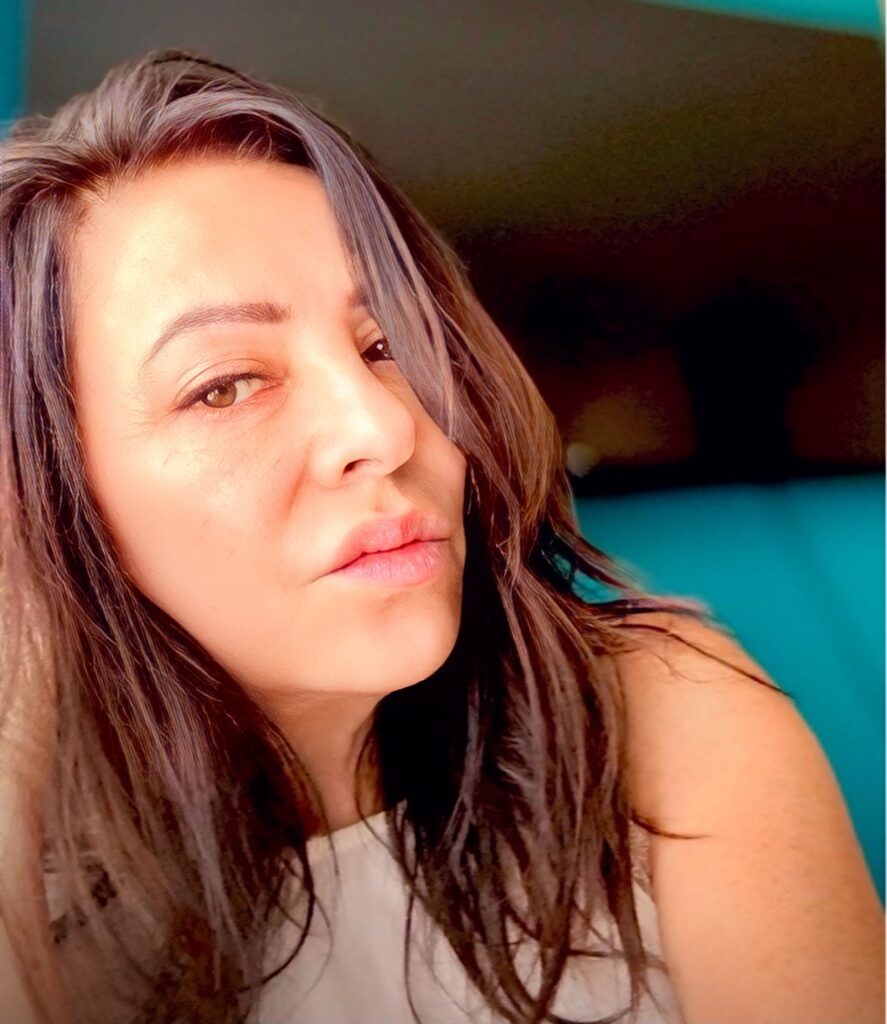
Imma Lavorato was born in San Demetrio Corone, Italy. She obtained her diploma from a teacher-training institute and has been teaching at a state-run preschool since 1997. In 2019, she earned a Bachelor’s Degree in Decoration from the Academy of Fine Arts in Naples, followed in 2022 by a Master’s Degree in Decoration from the same institution.
Professional Development and Workshops
Among her most significant professional development experiences are her participation in the following workshops:
Presentarsi nel Sistema dell’Arte (Introducing Oneself within the Art System), 12–25 May 2020.
Time 0.3, 1 April–6 September 2020.
Arte come disabitare: viaggio tra beni e monumenti (Art as Uninhabiting: A Journey Through Cultural Heritage and Monuments), 2021–2022.
Dinamiche seriali (Serial Dynamics), 2021–2022.
Tra metodo e progettazione (Between Method and Design), 2021–2022.
Arte come decolonizzare tra pratiche museali e quotidiano infraordinario (Art as Decolonisation: Between Museum Practices and the Infraordinary Everyday), 2021–2022.
Arte e pedagogia (Art and Pedagogy), 2021–2022.
Influencer Marketing, 2021–2022.
Exhibitions, Competitions and Artistic Projects
Lavorato has participated in numerous exhibitions, art competitions and cultural initiatives, including:
Lo stato dell’Arte al tempo della Biennale di Venezia (The State of Art at the Time of the Venice Biennale), curated by Giorgio Grasso, 10 August–10 October 2019.
Expo – MI – Città Metropolitana, curated by Giorgio Grasso, May 2015.
Exhibition of Italian Contemporary Art at the MACA Museum, Acri, Cosenza, January 2019.
Rassegna dell’Artes Maximae Friederich II Hohenstaunfen.
Contemporary Art Exhibition at the Norman-Swabian Castle of Cosenza, September 2019.
International Contemporary Art Award Arte senza confini (Art Without Borders), 2022.
Gli artisti calabresi per la Shoah (Calabrian Artists for the Shoah), Museum of the Bretti and Enotri, Cosenza, 2023.
Orticolario project competition, Villa Erba, Lake Como, 2024.
Her environmental and landscape-oriented projects have also received international recognition. She participated in the Festival International de Jardins in Canada in 2022, 2023 and 2024, with her projects published in connection with each edition.
Her work also includes contributions to projects combining contemporary art and urban regeneration. She created an installation as part of the artistic redevelopment of the Oncology Haematology Department at the G. Pascale Foundation in Naples. In 2019, she also contributed an installation to the urban regeneration of Via Caracciolo in Naples.
As part of an urban regeneration project in Naples, she developed a mural proposal in 2019.
Among her creations are Seduta Outdoor (Outdoor Seating, 2016) and I migranti (The Migrants), an installation created in 2019.
In 2019, three of her works were selected for the 30th edition of the Premio Nazionale Pandosia in Marano Principato, Cosenza, curated by Alessandra Carelli. Several of her works were also selected for exhibition at Galleria SpazioArte57 in Lamezia Terme in 2019.
Publications
Her work has been featured in several art publications, including:
Protagonisti delle nuove Avanguardie, EA Editori, 2013.
Protagonisti dell’arte dal XIX secolo ad oggi, curated by Paolo Levi, Leaders, 2014.
Catalogues
Il Codice che non c’è, 2016.
Arte Expo, curated by Gianfranco Pugliese, 2018.
Quadriennale dell’Arte Contemporanea, curated by Gianfranco Pugliese, 2019.
Catalogo Premio Pandosia, curated by Alessandra Carelli, 2019.
Awards
Arte senza confini: First Prize, Mixed Media, 2022.
Premio Galarte, 24th edition, 2022.
Arte senza confini: First Prize, Abstract Art, 2023–2024.