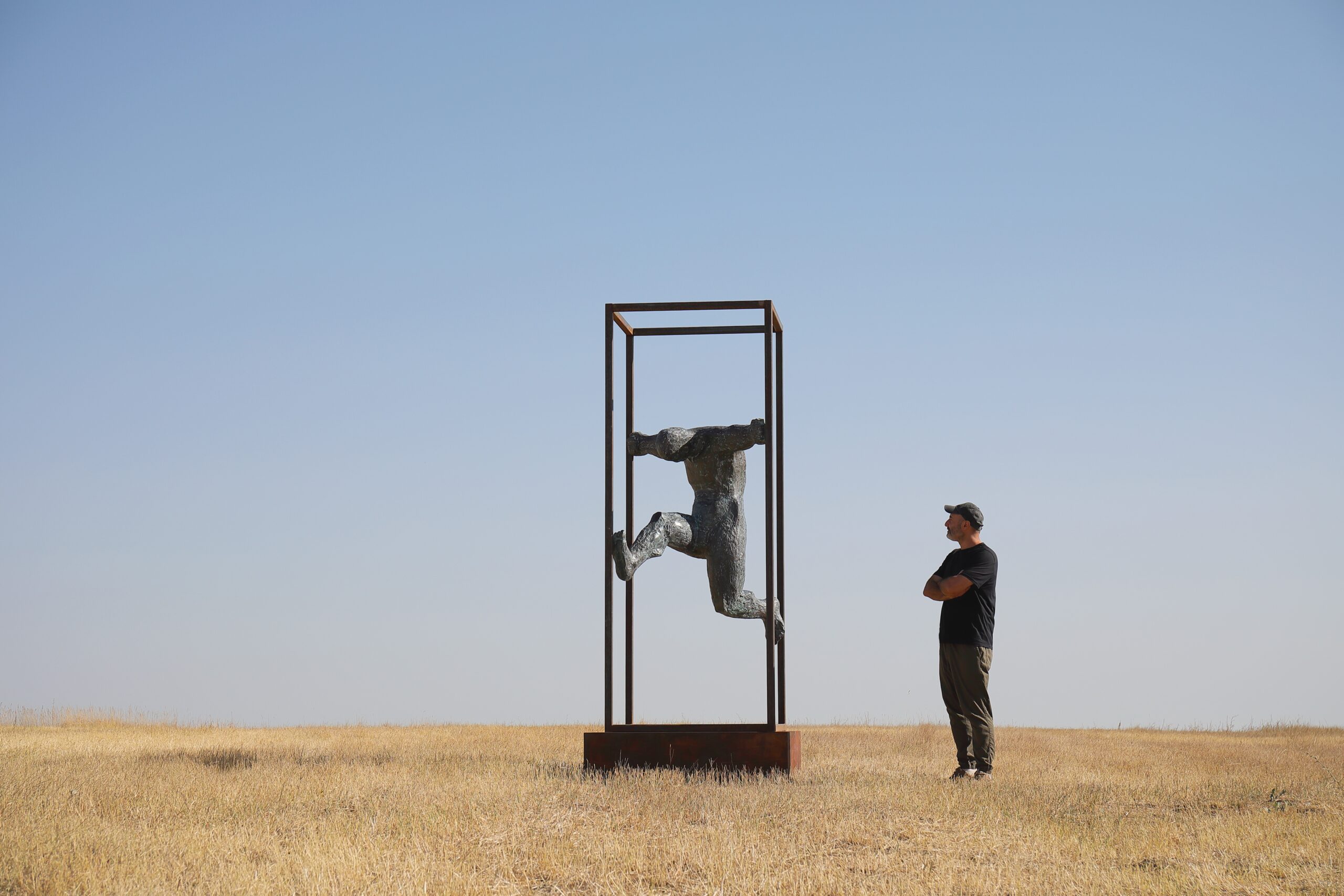
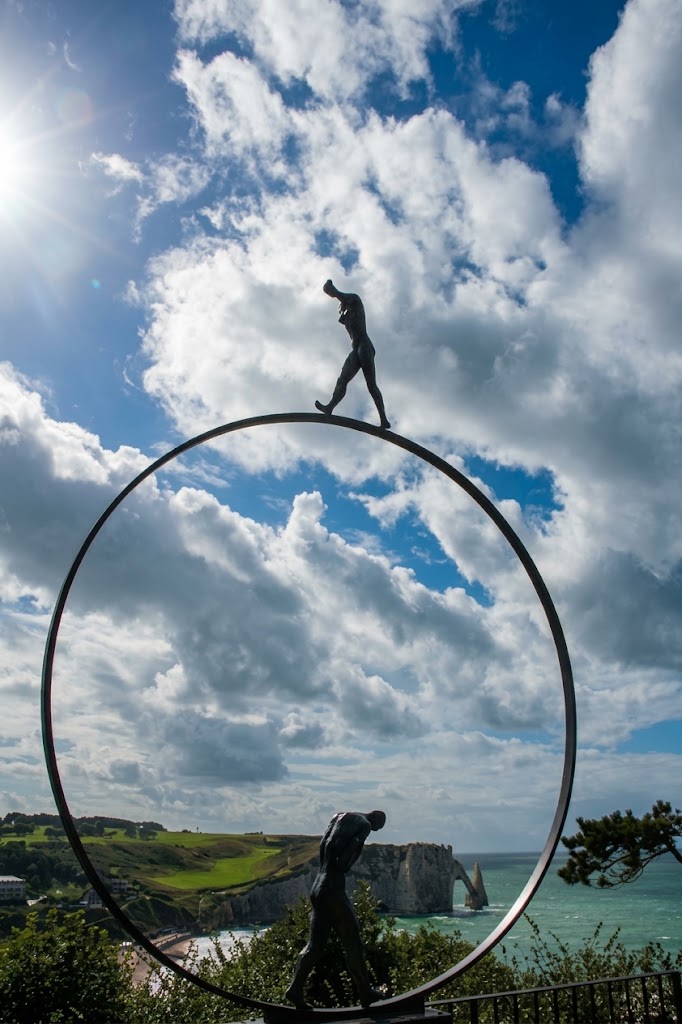
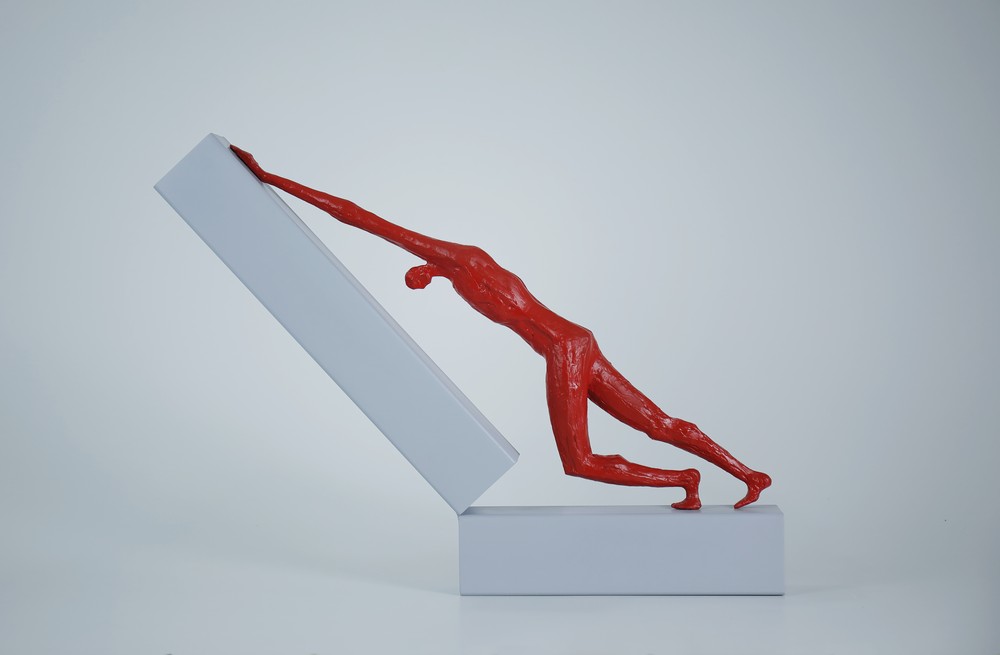
Ho conosciuto la ricerca di Gevorg Tadevosyan durante un mio recente viaggio in Normandia, attraverso una sua scultura esposta in permanenza nei giardini di Étretat. È stato l’incontro diretto con l’opera, inserita in un luogo di straordinaria suggestione paesaggistica, a suscitare il mio interesse per il suo linguaggio scultoreo e a spingermi ad approfondirne il percorso artistico.
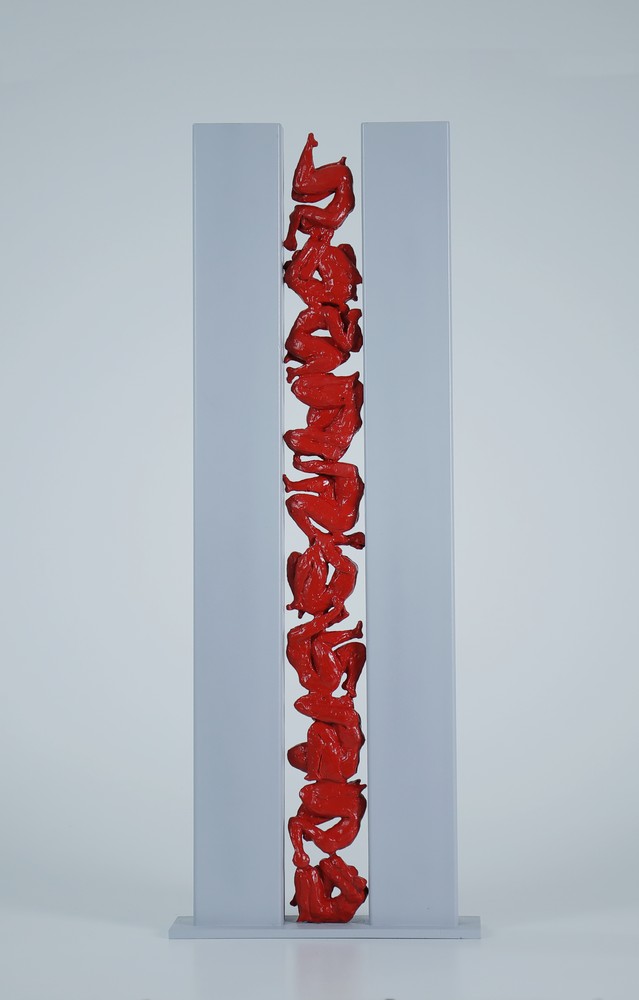
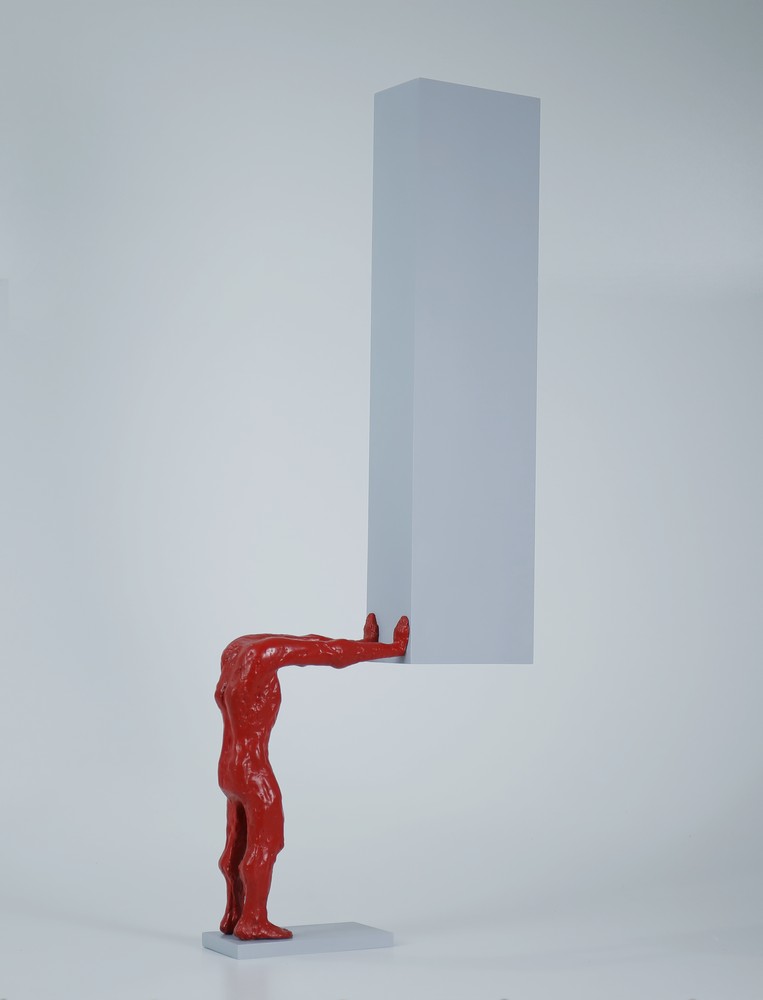
Nelle opere di Gevorg Tadevosyan, scultore contemporaneo di origine armena, il corpo umano non è una forma da riprodurre secondo le leggi dell’anatomia, ma una materia espressiva da interrogare, deformare e ricomporre fino a renderla capace di trattenere un’esperienza. Le figure allungate, le proporzioni alterate, il dialogo tra masse e linee rispondono a una necessità che precede la definizione del soggetto: trovare una struttura nella quale il vissuto possa tradursi in linguaggio plastico.
È significativo che l’artista consideri la scultura una forma di traduzione, il passaggio da un pensiero interiore a una materia che possa renderlo visibile senza disperderne l’essenza. In questa ricerca, la riconoscibilità della figura rimane un punto di partenza, mentre la sua configurazione obbedisce a una logica espressiva autonoma. Il corpo può perdere una parte della propria integrità anatomica, allungarsi o modificare il proprio peso visivo, purché ogni scelta contribuisca alla necessità della forma. La sintesi non impoverisce l’immagine: ne concentra le possibilità.
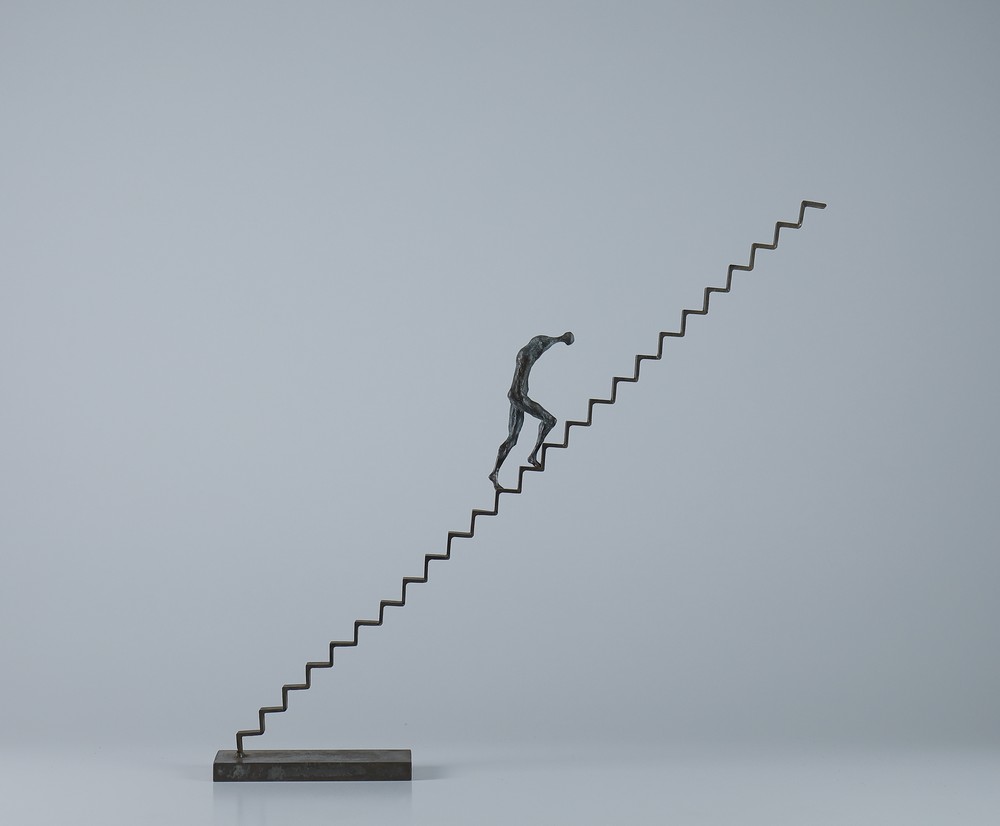
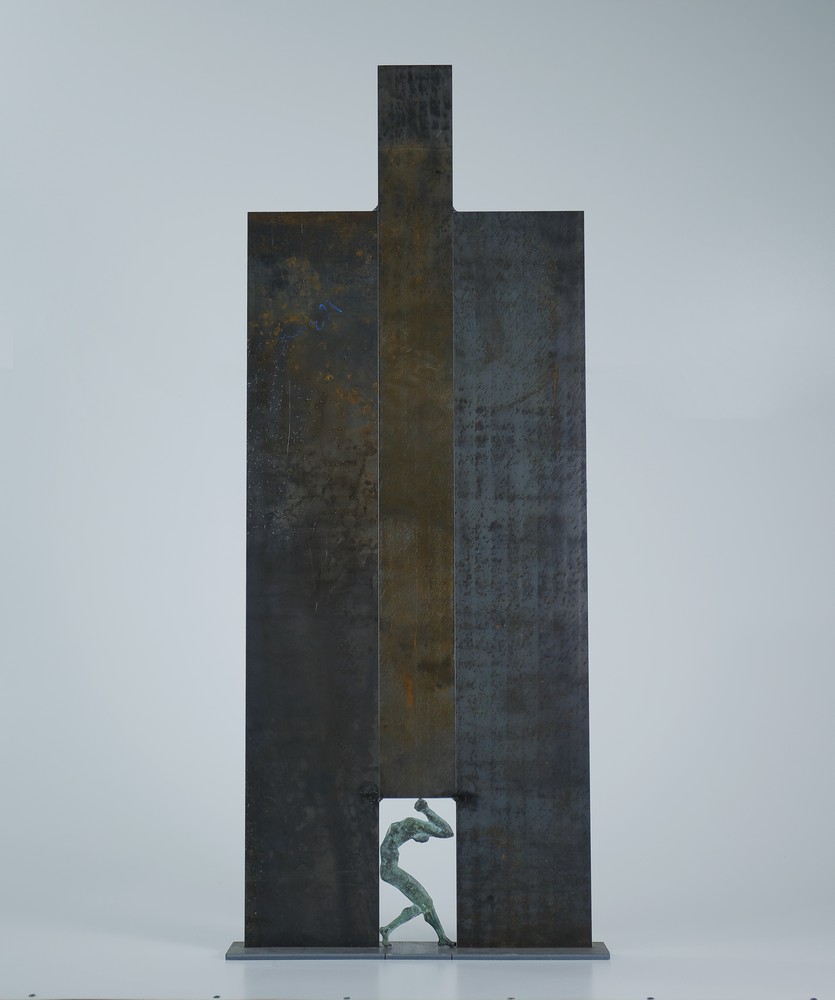
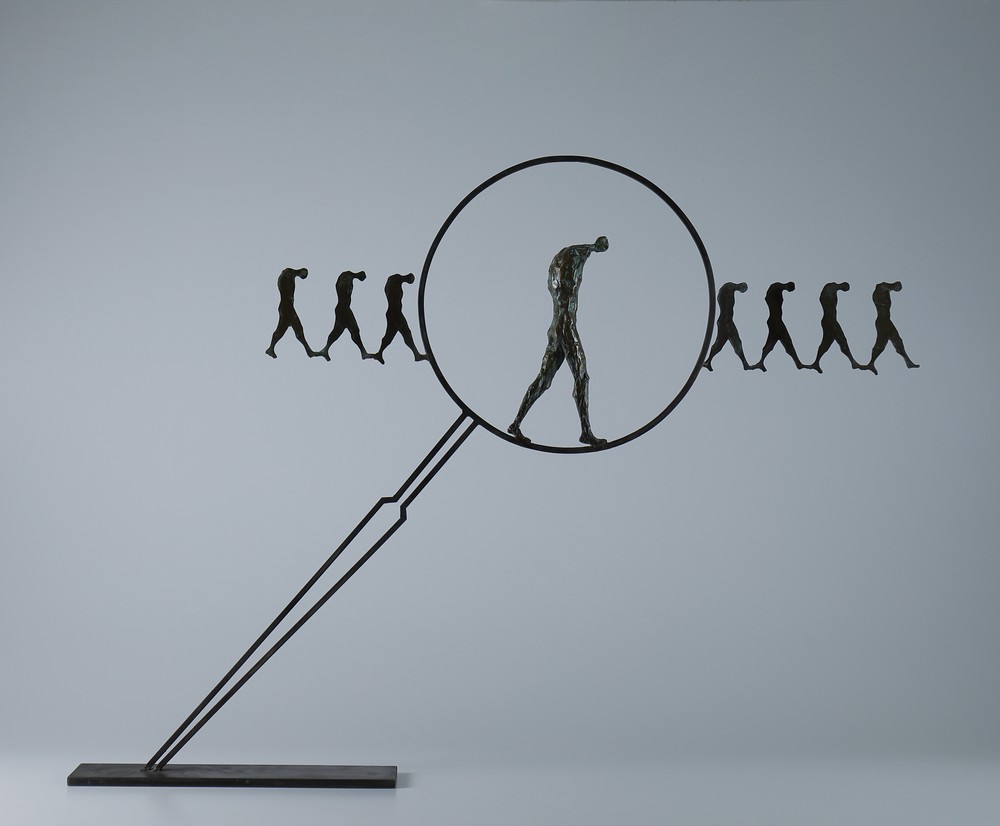
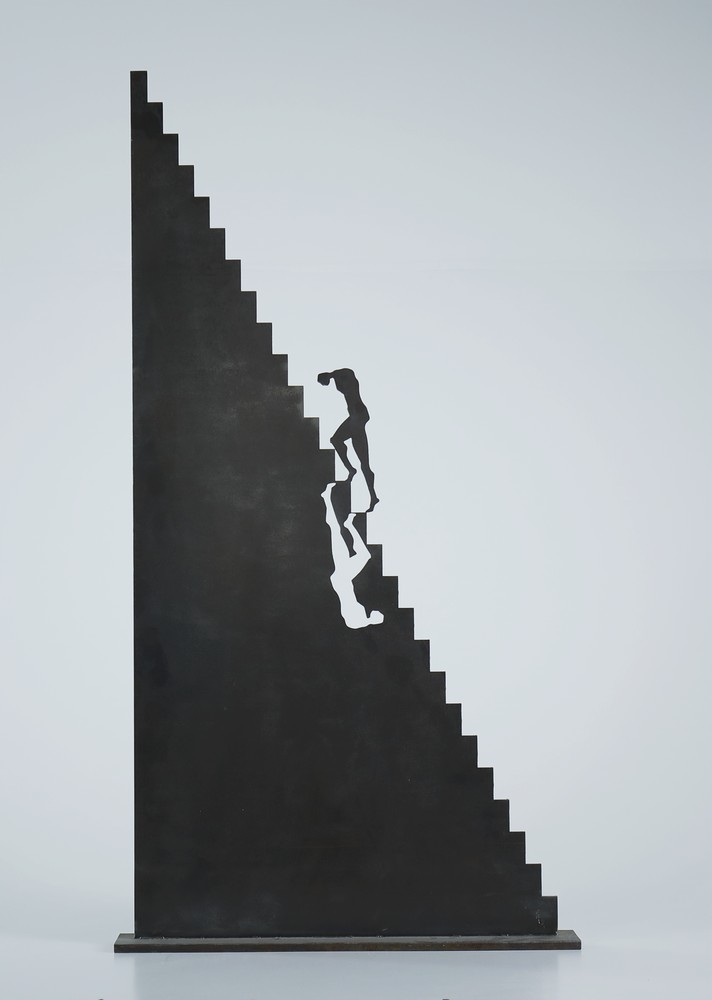
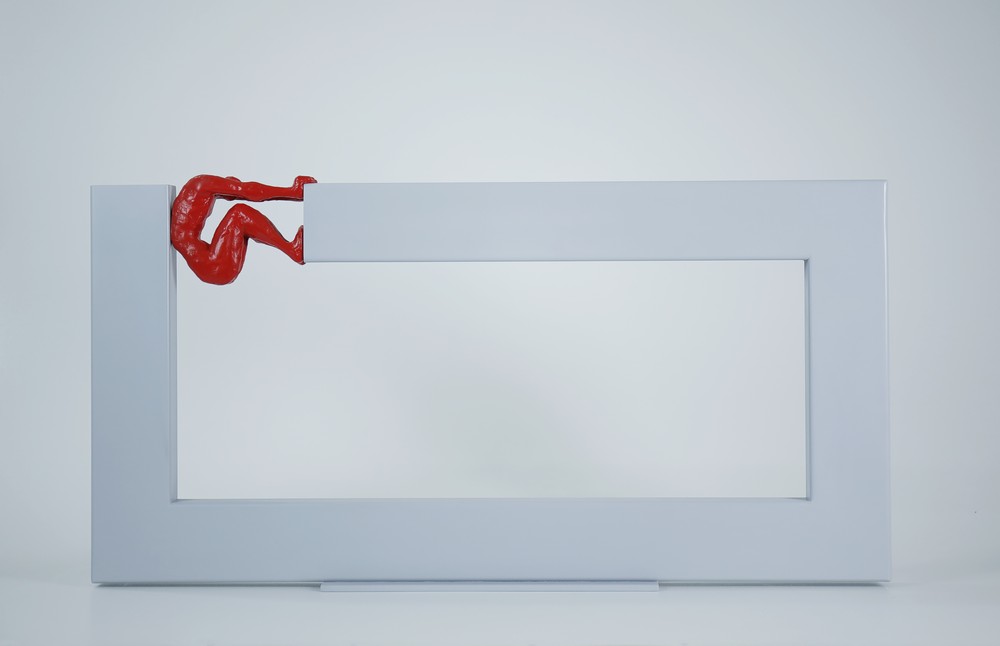
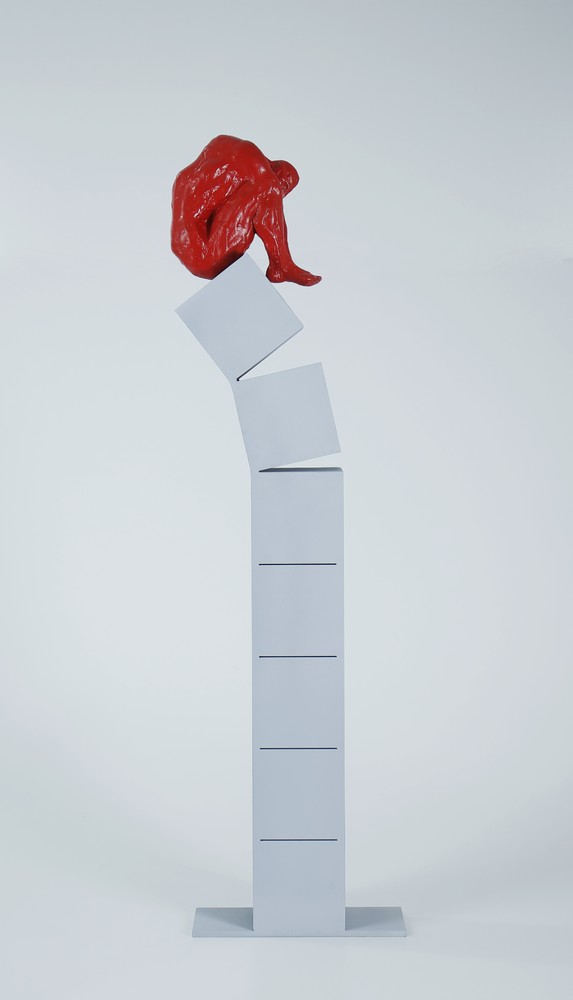
Il movimento costituisce uno degli aspetti più caratteristici di questa ricerca. Nelle opere di Tadevosyan, la materia bronzea sembra contenere un’azione che non si compie definitivamente, come se il gesto fosse trattenuto in un istante di equilibrio instabile. La vitalità delle figure non dipende da un’esibizione del dinamismo, ma dal modo in cui le masse si distribuiscono, le linee si prolungano e i corpi entrano in relazione. È una mobilità affidata alla struttura, capace di suggerire un prima e un dopo senza doverli raccontare.
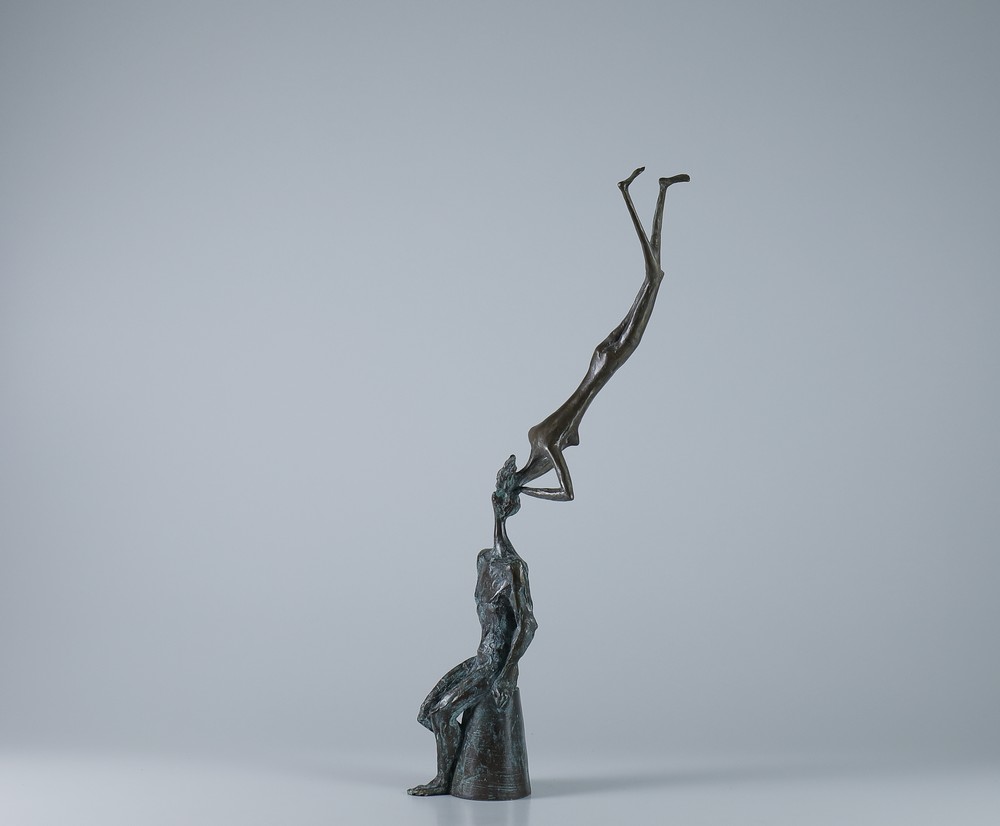
Anche la lavorazione del bronzo partecipa a questa costruzione del significato. L’artista concepisce il modello già in rapporto al materiale definitivo, anticipando il comportamento della superficie e il ruolo della patina. Quest’ultima non è un rivestimento accessorio: attraverso le variazioni cromatiche, le differenze di texture e la distribuzione della luce, contribuisce a distinguere le parti, a orientare lo sguardo e a stabilire gerarchie visive. Nell’opera Muse, per esempio, il contrasto tra la superficie più irregolare della figura maschile e quella levigata della figura femminile trova nella gradazione della patina un ulteriore elemento di articolazione. La materia diventa così parte attiva della composizione.
Eppure, il controllo tecnico non coincide con la volontà di determinare ogni esito. Tadevosyan ammette l’imprevisto quando questo introduce una qualità capace di arricchire l’opera, distinguendolo da ciò che compromette l’integrità della forma. Si delinea una pratica nella quale la disciplina del fare lascia spazio a una disponibilità vigile verso ciò che emerge durante il processo. L’esperienza non serve a eliminare l’incertezza, ma a riconoscere quando essa può diventare una risorsa.
La dimensione autobiografica della sua scultura chiarisce ulteriormente questa posizione. «Le mie sculture sono storie che parlano di me», afferma l’artista, riconoscendo nel lavoro una corrispondenza diretta con le situazioni e gli stati interiori attraversati durante la vita. Non c’è, in questa dichiarazione, la volontà di costruire un racconto confessionale: l’esperienza personale viene sottoposta a un processo di elaborazione formale che la sottrae alla cronaca individuale. È attraverso questa trasformazione che può diventare accessibile anche a chi non condivide la storia da cui l’opera ha avuto origine.
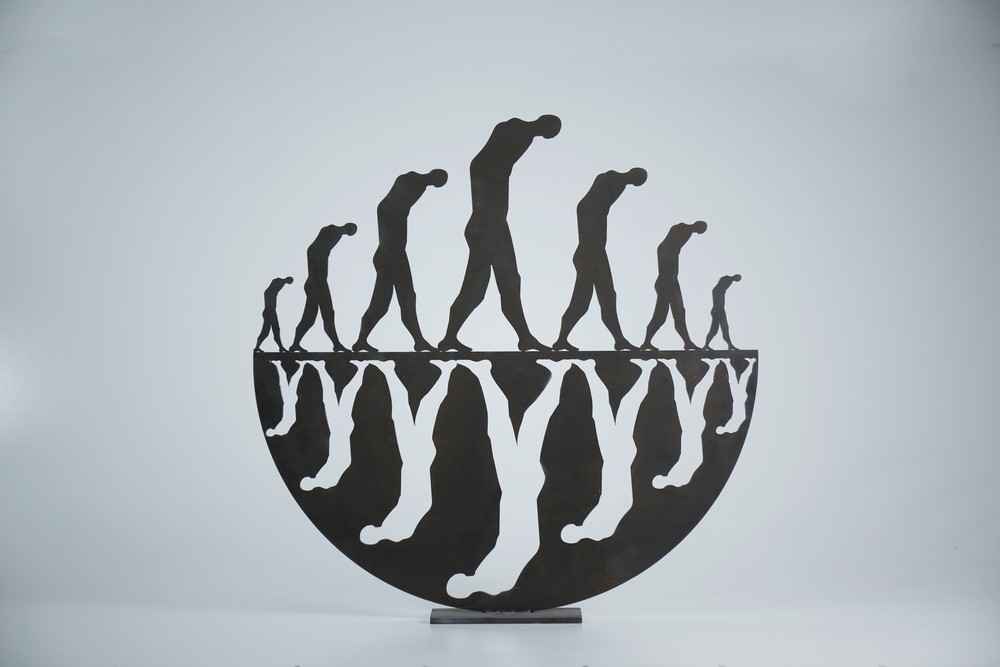
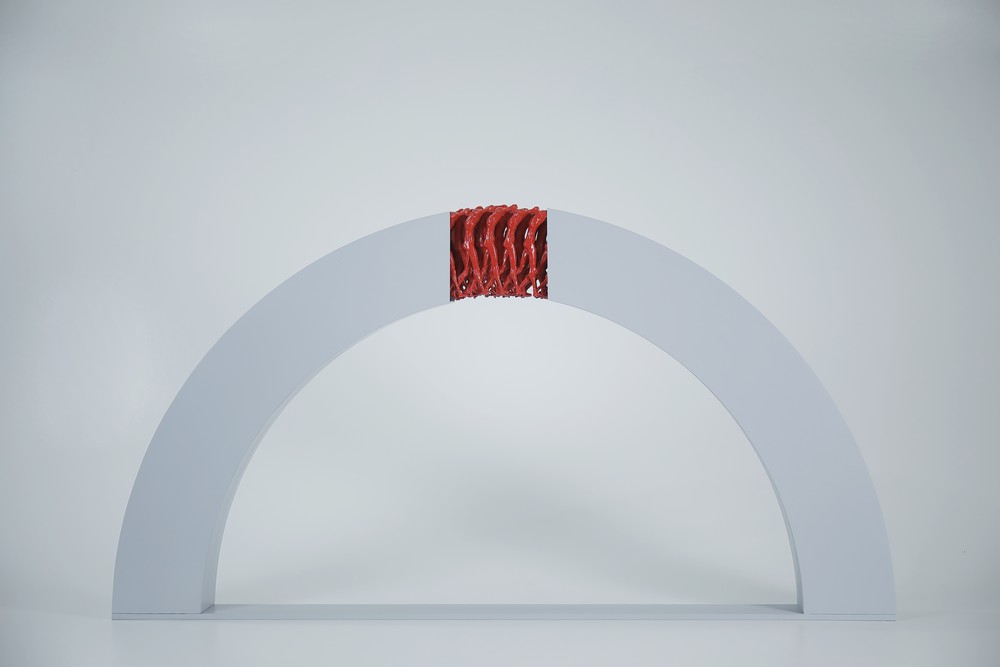
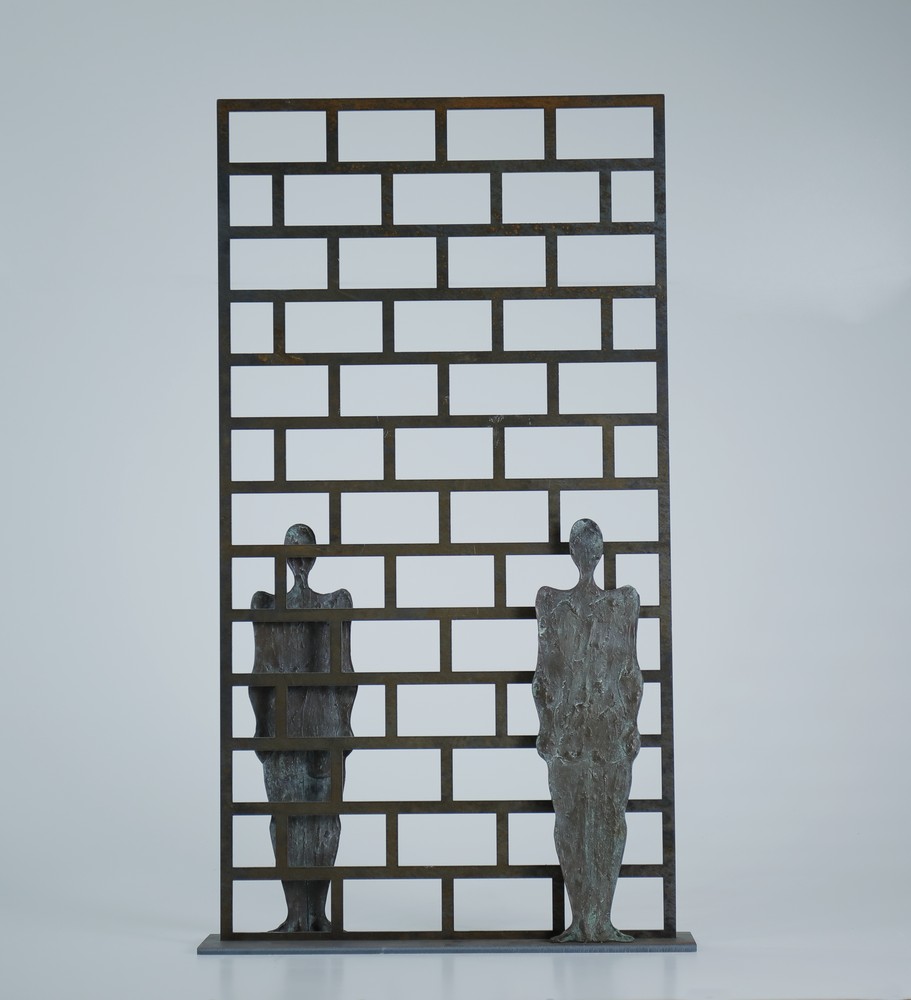
Lo dimostra l’episodio che Tadevosyan ricorda a proposito di Summer. Di fronte alla scultura, due osservatori formulano interpretazioni differenti: per uno, l’uomo e la donna si trovano ai lati del mondo; per l’altro, sono ai lati di un mondo che hanno costruito insieme. Invitato a chiarire quale fosse l’intenzione originaria, l’artista riconosce entrambe le letture. L’aneddoto restituisce con precisione una delle questioni centrali della sua ricerca: l’opera nasce da un’esperienza individuale, ma la sua esistenza non rimane circoscritta a essa. La relazione tra le figure, la struttura circolare e il punto di vista di chi osserva generano possibilità che nessuna spiegazione definitiva potrebbe esaurire.
Lo stesso principio riguarda il rapporto con lo spazio. Collocata in un giardino, in un parco o in un ambiente espositivo, la scultura cambia percezione attraverso la luce, le distanze e gli elementi che la circondano. Per Tadevosyan, tuttavia, la capacità di entrare in relazione con un luogo dipende anzitutto dalla coerenza interna dell’opera. Il paesaggio può modificarne la lettura, ma non sostituirne la forza. È una distinzione importante, soprattutto quando la dimensione monumentale rischia di essere confusa con il semplice ingrandimento della forma: le dimensioni acquistano valore soltanto quando sono sostenute da una necessità espressiva.
Nel percorso di Tadevosyan, la scultura appare dunque come un esercizio di conoscenza che procede insieme alla vita. Non esiste un linguaggio definitivamente acquisito né un punto d’arrivo prestabilito; ogni opera registra una condizione particolare dell’artista e, proprio per questo, apre la possibilità di una trasformazione successiva. La sua ricerca trova qui una misura riconoscibile: nella capacità di affidare alla forma un’esperienza autentica, senza imporle un significato univoco, lasciando che la materia continui a parlare anche oltre ciò che il suo autore ha consapevolmente affidato a essa.
© Giuseppina Irene Groccia, 2026. Tutti i diritti riservati.
A questa lettura critica si affianca il prezioso contributo dell’artista, che ha accolto con gentilezza e disponibilità l’invito a questa conversazione, rendendo il dialogo un’occasione di approfondimento della sua ricerca, delle sue visioni e del percorso che ne definisce l’identità espressiva.
INTERVISTA
La sua formazione artistica affonda le radici in Armenia, dove ha studiato presso l’Accademia Statale di Belle Arti di Yerevan. Quanto hanno contribuito la cultura visiva del suo Paese, la sua tradizione scultorea e il contesto in cui è cresciuto a definire il suo sguardo artistico? E in che modo questa eredità continua a dialogare con la sua ricerca contemporanea?
La mia formazione presso l’Accademia Statale di Belle Arti di Yerevan ha rappresentato una base importante per il mio sviluppo come scultore. Essere cresciuto e aver studiato in Armenia mi ha permesso di entrare in contatto con un ambiente culturale ricco e con una lunga tradizione artistica. Questo patrimonio rimane parte del mio retroterra, ma considero il mio linguaggio artistico soprattutto individuale, piuttosto che definito dall’identità nazionale.
Nella mia ricerca, la figura umana è uno strumento attraverso cui esprimere pensieri, sensazioni ed emozioni che trascendono i confini culturali. Mi interessa l’esperienza umana nella sua dimensione universale, perché questi pensieri, sensazioni ed emozioni non appartengono esclusivamente a una determinata nazione o cultura. Sono proprio essi a permettere a persone provenienti da realtà diverse di riconoscere qualcosa di sé in un’opera d’arte.
La mia intenzione è comunicare attraverso la scultura le esperienze della mia vita nel modo più diretto e preciso possibile. Cerco di evitare il pathos e le drammatizzazioni superflue, puntando piuttosto a esprimere con essenzialità come ogni elemento, quando risponde a una precisa funzione, e poche forme fondamentali possano trasmettere qualcosa di profondo. Per me, la forza di una scultura non risiede nell’esagerazione, ma nella sua capacità di esprimere un’esperienza interiore con chiarezza e misura.
Il mio patrimonio culturale è una parte inseparabile di ciò che sono, ma non cerco di rappresentarlo in modo esplicito. Esso convive con le mie esperienze personali e contribuisce a orientare il mio sguardo, mentre le mie sculture si esprimono attraverso un linguaggio visivo che spero possa essere compreso e sentito al di là dei confini nazionali e culturali.
Ha descritto la scultura come una forma di pensiero ed espressione, nata dall’incontro tra linea, volume e luce. Prima ancora di riconoscere un soggetto o un significato, sembra esserci nelle sue opere una ricerca formale che prende vita attraverso il gesto e la silhouette. Come nasce, concretamente, una sua scultura? Qual è il momento in cui un’intuizione ancora indefinita comincia a trovare la propria forma?
A volte penso alla scultura come a una forma di traduzione. I miei pensieri e le mie emozioni sono la mia lingua madre, mentre la materia è un altro linguaggio attraverso il quale posso esprimerli. Il processo creativo è la traduzione stessa: la ricerca di una forma capace di trasmettere ciò che sento e penso senza perderne l’essenza.
Ammiro gli artisti che riescono a descrivere con chiarezza il proprio processo creativo. Prima di iniziare una nuova scultura, a volte mi dico: «Concentrati, ascolta ciò che senti e cerca di cogliere quel primo istante in cui qualcosa di nuovo prende forma». (Se non altro per me stesso, almeno in vista delle interviste che un giorno potrebbero chiedermi di rilasciare!) Eppure, mi ricordo sempre questa intenzione soltanto quando quel momento è ormai passato.
Credo che tanto la nascita di un’idea quanto il processo che le conferisce forma rimangano, in parte, al di là della nostra capacità di comprensione. Possiamo partecipare a questo processo, seguirne lo sviluppo e influenzarne la direzione, ma non possiamo cogliere pienamente l’istante in cui tutto ha inizio, né spiegare ogni passaggio che ne consegue.
A volte intravedo un parallelismo con il processo creativo dell’universo stesso. Possiamo osservarne il dispiegarsi, ma l’istante iniziale della creazione rimane al di là della nostra comprensione. Forse anche la scultura custodisce qualcosa di questo mistero: partecipiamo alla nascita di qualcosa che prima non esisteva, eppure l’origine stessa di quella creazione continua a sfuggirci, persino a noi che ne siamo artefici.
Nelle sue opere, figure spesso slanciate e composizioni essenziali riescono a suggerire una sorprendente sensazione di movimento. Lei stesso ha individuato in questa ricerca una delle sfide centrali del suo lavoro: dare vitalità a una forma che, per sua natura, rimane immobile. Quali elementi le consentono di ottenere questo effetto? E quanto contano, in questo processo, il ritmo delle linee, l’equilibrio dei volumi e lo spazio che circonda la scultura?
Non penso consapevolmente al ritmo delle linee o all’equilibrio delle masse come a principi distinti. Emergono dall’interno, come parte del processo creativo di ogni scultura. È la forma stessa a sembrare indicare come debba svilupparsi, mentre il mio compito consiste nel trovare il modo più preciso per darle corpo.
In questo senso, vedo una somiglianza tra la scultura e la scrittura. Quando uno scrittore compone un testo, attinge a tutto ciò che ha letto e assimilato nel corso degli anni. Il suo vocabolario riflette le esperienze vissute e il suo percorso di crescita personale. Credo che nella scultura accada qualcosa di simile: il mio approccio alla linea, alla massa, all’equilibrio e al movimento nasce dall’esperienza accumulata e dalla mia evoluzione artistica, piuttosto che dall’applicazione consapevole di regole specifiche. La conoscenza tecnica è essenziale, ma deve essere al servizio dell’idea, senza prevalere su di essa.
Anche lo spazio circostante riveste un ruolo altrettanto importante, soprattutto per le sculture esposte all’aperto. In una galleria, l’opera entra in relazione con le pareti, con un dipinto nelle vicinanze o con un’altra scultura collocata su un piedistallo. All’esterno, invece, l’ambiente si estende notevolmente: il cielo, gli alberi, le montagne, l’architettura e i cambiamenti della luce influenzano il modo in cui la scultura viene percepita. La posizione del sole o la presenza di un elemento vicino possono trasformare la percezione dell’opera.
Il suo linguaggio intreccia realismo e allegoria, dimensione figurativa e sintesi formale. Le sue figure possono evocare relazioni, stati d’animo e dinamiche collettive senza ricorrere a una narrazione esplicita. Come trova il punto di equilibrio tra la riconoscibilità della figura e la sua trasformazione in una presenza simbolica? C’è qualcosa che preferisce lasciare volutamente aperto, affinché sia lo spettatore a completare il significato dell’opera?
Per me, il corpo umano è un linguaggio e, come ogni linguaggio, si trasforma attraverso l’uso. Ciò che conta non è preservare le proporzioni del corpo, ma consentirgli di esprimere pienamente ciò che desidero comunicare.
Se la composizione richiede l’assenza delle braccia o un maggiore allungamento delle gambe, non mi soffermo sulle proporzioni anatomiche. Seguo le esigenze della composizione e permetto al corpo di assumere la forma necessaria affinché l’opera possa esprimersi nella sua interezza.
Il corpo umano racchiude possibilità inesauribili. Possiede una straordinaria plasticità, che gli consente di esprimere stati contrastanti: fragilità e solidità, forza e impotenza, tensione e quiete. Per me, il corpo non è semplicemente una forma da rappresentare, ma un mezzo attraverso il quale un’idea o un sentimento possono trovare la loro espressione più precisa.
L’idea e la forma si sviluppano insieme durante tutto il processo creativo. Sono inseparabili: ciascuna influenza e modella l’altra mentre la scultura prende forma. Non considero la figura qualcosa che debba necessariamente conformarsi a un insieme prestabilito di regole. Ciò che conta è trovare la forma più adatta a dare espressione all’idea.
Non credo sia possibile far vivere allo spettatore un’esperienza della scultura identica a quella che ho vissuto io durante la sua creazione, né far sì che la comprenda esattamente nello stesso modo. L’esperienza dell’artista e quella dello spettatore sono inevitabilmente diverse. Ogni osservatore porta con sé emozioni, ricordi ed esperienze personali. Questo aspetto è una componente inevitabile dell’incontro con l’arte, ma anche una parte importante del suo valore.
Non posso controllare pienamente il modo in cui lo spettatore vive la mia scultura, né aspettarmi che provi esattamente ciò che ho sentito io mentre la realizzavo. Questa differenza, tuttavia, non riduce il significato che ho affidato all’opera. Al contrario, permette alla scultura di entrare a far parte dell’esperienza di un’altra persona, acquisendo significati che vanno oltre le mie intenzioni originarie.
La fusione a cera persa richiede una successione di passaggi nei quali l’idea attraversa materiali e trasformazioni differenti, dalla modellazione alla fusione, fino alla lucidatura e alla patinatura del metallo. In un processo così articolato, quanto riesce a mantenere il controllo sull’esito finale e quanto, invece, accoglie gli imprevisti della materia? La superficie bronzea, con le sue variazioni di luce e texture, conserva per lei anche una traccia del processo creativo?
Uno scultore sa quale materiale sia più adatto alla forma e al carattere di una determinata opera. Il mio pensiero scultoreo trova nel bronzo il materiale più congeniale. Già nella fase iniziale della modellazione, quando lavoro con l’argilla da modellare o la plastilina, immagino la scultura nella sua veste definitiva in bronzo.
Sviluppo il modello tenendo presente il materiale finale. Quando desidero che una determinata parte del bronzo abbia maggiore incisività, intervengo sulla plastilina in modo da darle più risalto. Quando, invece, voglio che una forma si fonda maggiormente nelle tonalità della patina, modello diversamente quella parte, anticipando il comportamento che la superficie avrà nella scultura finita.
Considero questo processo simile alla direzione di un’orchestra. Il direttore stabilisce quale strumento debba emergere con maggiore evidenza, quale debba arretrare e quale debba mantenere la propria posizione. Ogni strumento ha una voce distinta, ma l’obiettivo è riunire tutte le voci in una composizione unitaria, come in una sinfonia. Allo stesso modo, lavoro sulle diverse parti della scultura affinché forma, superficie, luce e patina svolgano ciascuna il proprio ruolo nell’opera compiuta.
La fusione del bronzo è, in una certa misura, un processo imprevedibile. Talvolta, per ragioni tecniche, può emergere un volume inatteso in una determinata zona oppure una forma può risultare meno pronunciata di quanto avessi previsto. Se una simile variazione arricchisce la scultura e la rende più interessante, sono disposto ad accettarla, anche quando non rientra nel progetto iniziale. Se, invece, il risultato presenta un evidente difetto tecnico, intervengo per correggerlo e ripristinare l’integrità della forma.
Anche la patinatura riveste per me un’importanza fondamentale. Se genera colori inaspettati e ricche variazioni tonali che valorizzano la scultura e la portano a compimento, scelgo di conservarli, anche quando differiscono da ciò che avevo immaginato inizialmente. Se, al contrario, il risultato non corrisponde alle mie intenzioni, ripeto il procedimento fino a ottenere l’effetto desiderato.
Cerco di fare in modo che la patina diventi una componente attiva della scultura, anziché un semplice mezzo per modificare il colore del bronzo. Deve contribuire alla forma e al significato dell’opera.
Un esempio è la mia scultura Muse, nella quale la figura maschile è seduta e presenta una superficie più irregolare, mentre quella femminile si eleva verso l’alto e ha una finitura più liscia e levigata. Durante l’applicazione della patina, ho reso più scura la parte inferiore della scultura, schiarendo gradualmente le tonalità verso la figura superiore. In questo modo, la patina rafforza il contrasto tra le due figure e diventa parte integrante della composizione complessiva.
Per me, il risultato finale nasce dall’interazione tra intenzione, materia e decisioni maturate nel corso del processo creativo. Cerco di mantenere il controllo sulla forma essenziale e sull’espressività della scultura, restando al tempo stesso aperto agli esiti inattesi, quando apportano un valore autentico all’opera.
Nelle sue sculture emerge spesso una riflessione sulla condizione umana, tra individualità e appartenenza, vicinanza e isolamento. Sono contrasti che sembrano trovare espressione soprattutto nei gesti e nelle relazioni tra le figure, più che in una rappresentazione descrittiva delle emozioni. Come affronta questi temi senza trasformare la scultura in un racconto troppo esplicito? E quanto ritiene importante che un’opera possa suscitare interpretazioni diverse, anche lontane dalle sue intenzioni iniziali?
Le mie sculture sono storie che parlano di me. Esprimono le situazioni in cui mi trovo e le emozioni che vivo in un determinato momento.
Non esiste una sola scultura in cui abbia cercato di comunicare un sentimento mentre, dentro di me, ne provavo uno completamente diverso. Le mie sculture nascono da ciò che sto realmente vivendo. In questo senso, sono opere autobiografiche.
Quando scolpisco, non penso allo spettatore. La mia attenzione è interamente rivolta al processo creativo e alla possibilità di aver espresso tutto ciò che desideravo comunicare. Cerco di seguire un sentimento o un pensiero fino in fondo, fino a quando non ho più nulla da esprimere.
Anche se nessuno dovesse provare alcuna emozione osservando una determinata scultura, essa conserverebbe comunque un valore per me, se sapessi di essermi espresso pienamente nel realizzarla, portando fino al suo esaurimento l’emozione da cui aveva avuto origine.
Non posso stabilire che cosa un’altra persona vedrà o sentirà nella mia opera, né cerco di controllarne l’interpretazione. La mia responsabilità consiste nell’essere sincero rispetto a ciò che vivo e nel dargli la più piena espressione possibile. Ciò che accade in seguito, quando la scultura incontra un’altra persona, appartiene a una fase diversa della sua esistenza.
Opere come Summer suggeriscono che la relazione tra le figure non si esaurisca nella loro presenza fisica, ma si estenda allo spazio che esse condividono e al movimento che sembra attraversarle. In una composizione circolare, il rapporto tra i corpi e la forma complessiva può diventare esso stesso una narrazione. Quando lavora a un’opera di questo tipo, pensa prima alle singole figure oppure alla relazione che le unirà? E come cambia il significato di una scultura quando lo spettatore può osservarla da più punti di vista, muovendosi attorno a essa?
In quel periodo, il mio interesse era rivolto soprattutto a composizioni costruite attorno a figure maschili e femminili, attraverso l’esplorazione delle loro somiglianze e differenze. Utilizzo la massa per esprimere questa diversità: una figura diventa simbolo di leggerezza, l’altra di peso e gravità. Mi interessava indagare il rapporto tra queste qualità contrapposte e il modo in cui potessero convivere all’interno di un’unica composizione.
Summer appartiene a quella fase della mia ricerca ed è una delle opere della serie Seasons. Come accade per gli altri miei lavori, anche questa scultura nasce da esperienze personali e dal tentativo di tradurle attraverso la materia.
Per me, il rapporto tra le figure è inseparabile dalla composizione complessiva. Non le considero semplicemente corpi distinti, accostati l’uno all’altro, ma elementi di una forma unitaria, nella quale ciascuna figura influenza la percezione dell’altra.
Le diverse prospettive da cui gli spettatori osservano una scultura possono far emergere interpretazioni alle quali io stesso potrei non aver pensato consapevolmente. Ricordo un episodio avvenuto quando Summer fu installata per la prima volta. Ero solito tornare spesso a visitarla e trascorrere del tempo a osservarla. Un giorno mi trovavo nelle vicinanze, mentre alcune persone discutevano dell’opera. Una di loro disse: «Credo che lo scultore abbia rappresentato questo mondo, con l’uomo e la donna collocati ai suoi lati opposti». Un’altra rispose: «Secondo me, è il mondo che loro stessi hanno creato, e alla fine si sono ritrovati ai lati opposti di esso». A quel punto, uno dei presenti si rivolse a me e mi chiese: «Secondo lei, che cosa voleva comunicare l’artista?». Risposi: «Sono certo che l’artista sarebbe d’accordo con entrambi».
Credo che una scultura possa racchiudere possibilità interpretative che vanno oltre una lettura univoca. L’artista affida all’opera qualcosa di personale, ma, una volta entrata nel mondo, essa incontra le esperienze, le prospettive e i modi di vedere di chi la osserva. Le interpretazioni degli spettatori possono rivelare aspetti della scultura che non rientravano nelle mie intenzioni consapevoli, e che tuttavia appartengono naturalmente all’opera stessa.
Le sue opere sono state presentate in luoghi molto diversi, dai giardini di scultura e dai parchi internazionali agli spazi espositivi e alle collezioni museali. Un’opera collocata in un ambiente naturale è esposta a una luce mutevole, alle stagioni, alle distanze e alla presenza delle persone; in uno spazio museale, invece, il rapporto con il pubblico si costruisce secondo altre modalità. Quanto incide il luogo sulla progettazione di una scultura? Considera il paesaggio e l’architettura semplici cornici oppure elementi attivi che partecipano alla sua interpretazione?
Quando realizzo una scultura, è impossibile immaginare con esattezza quale ambiente la accoglierà in futuro e in che modo verrà percepita al suo interno.
Credo che, quando una scultura raggiunge una piena compiutezza ed esprime la propria idea con tutta la sua forza, tenda a influenzare l’ambiente circostante più di quanto ne sia condizionata. Naturalmente, la stessa opera viene percepita in modo diverso a seconda del luogo in cui si trova. Ciò che rimane impresso, tuttavia, è la forza che proviene dalla scultura stessa, piuttosto che quella che l’ambiente le conferisce.
È un fenomeno naturale, come accade nelle relazioni tra le persone. Non possiamo controllare né prevedere il modo in cui una stessa persona verrà percepita in circostanze differenti. Anche il colore cambia effetto in base a ciò che lo circonda: il giallo assume una risonanza su una tela rossa, un’altra su una superficie bianca e un’altra ancora su uno sfondo nero. Il giallo rimane invariato, ma la sua percezione cambia in relazione ai colori circostanti.
Lo stesso accade con una persona. Un filosofo circondato dai suoi allievi devoti appare in un certo modo, mentre quello stesso filosofo, a casa, in compagnia dei nipoti, ne assume un altro. Eppure, in entrambe le situazioni, la persona rimane la stessa.
Nel caso di una scultura collocata all’aperto, questo rapporto diventa più complesso. La natura costituisce già un insieme compiuto e armonioso. Il cielo, le montagne e i campi partecipano a un equilibrio che noi scultori non possiamo migliorare. Se una scultura non risulta convincente in un simile ambiente, il problema risiede nell’opera stessa, non nella natura.
Credo che sia possibile raggiungere un’armonia con la natura soltanto quando l’artista rimane fedele alla propria condizione autentica, a ciò che è, con la stessa semplicità e armonia che appartengono alla natura. Se un artista sente una cosa, ma ne crea un’altra, la sua opera non riuscirà a entrare in sintonia con quell’ambiente e resterà separata da esso.
Per me, dunque, non si tratta semplicemente di collocare una scultura nel luogo più adatto. La questione riguarda piuttosto la sua origine: occorre capire se l’opera sia nata da un’esperienza interiore autentica. Quando questo accade, la scultura può instaurare una relazione naturale con ciò che la circonda, senza perdere la propria identità.
Accanto alla sua attività di scultore, il lavoro svolto nell’ambito delle scenografie per il teatro, l’opera e il balletto, insieme all’esperienza didattica, apre un interessante confronto tra linguaggi artistici differenti. Il teatro vive di movimento, luce, tempo e presenza; la scultura sembra invece sottrarsi al fluire del tempo, pur potendone evocare il passaggio. In che modo queste esperienze hanno influenzato il suo modo di concepire lo spazio, la gestualità e la presenza fisica delle forme? Ha mai riconosciuto, in una sua scultura, una qualità che nasce proprio da questo dialogo con il mondo scenico?
Non credo che il mio lavoro presso il Teatro dell’Opera abbia lasciato una traccia diretta o immediatamente riconoscibile nella mia scultura. Sebbene queste discipline condividano alcune qualità, rimangono pratiche creative fondamentalmente diverse.
Lavorare su un grande palcoscenico, realizzando scenografie e strutture alte fino a sei metri, è stata certamente un’esperienza preziosa. Esiste, tuttavia, una differenza sostanziale tra creare un elemento scenografico di sei metri e realizzare una scultura della stessa altezza. Nella scultura, le dimensioni, da sole, non bastano a conferire all’opera una presenza o una forza espressiva. Se una scultura è priva di una forza interiore, ingrandirla non potrà conferirgliela. La scala monumentale non può compensare ciò che manca all’opera stessa.
Anche lavorare con i bambini è stata un’esperienza preziosa. Mi ha spesso colpito il loro coraggio, la loro libertà e il modo in cui si immergono nell’atto creativo, senza preoccuparsi del risultato finale. Sono completamente assorbiti dal processo, fanno ciò che sentono di dover fare, senza le esitazioni e le inibizioni che possono svilupparsi con l’esperienza.
Quando torno nel mio studio, ritorno al mio punto di partenza. È quasi come se mi togliessi un abito: sia l’esperienza maturata al Teatro dell’Opera sia la spontaneità che incontro nel lavoro con i bambini rimangono fuori dalla porta dello studio.
Ritorno alla mia condizione naturale, là dove il rapporto tra me e l’opera che sta per nascere prende avvio ogni volta da capo. È una relazione difficile da descrivere, che non può essere sostituita dall’esperienza acquisita né da metodi applicati consapevolmente.
Un altro elemento importante del mio percorso è rappresentato dagli oltre vent’anni di esperienza, tanto nel processo creativo quanto nell’ambito tecnico. Forse, per me, la distinzione più importante è proprio questa: l’esperienza ci arricchisce, ma la creazione di una scultura richiede qualcosa di più essenziale, ovvero la capacità di ritrovare se stessi e di rimanere fedeli alla propria dimensione interiore.
Ha affermato di non voler circoscrivere la propria ricerca a un tema preciso, lasciando che sia l’armonia delle forme a precedere la definizione del soggetto. È una posizione che suggerisce un rapporto aperto con la creazione, ma anche una continua disponibilità a mettersi in discussione. Guardando al percorso compiuto finora, quali aspetti del suo linguaggio sente di aver maggiormente trasformato e quali, invece, sono ancora da esplorare? E c’è una domanda artistica alla quale non ha ancora trovato una risposta, ma che continua a guidare il suo lavoro?
Per me, il processo creativo è così strettamente legato alla mia vita e alla mia quotidianità che è impossibile separarlo da esse e valutarlo in modo autonomo. Forse, il gesto stesso del creare è molto più naturale di qualsiasi tentativo di descriverlo.
Cartesio scrisse la celebre frase: «Penso, dunque sono». Se dovessi riprendere questo pensiero a modo mio, direi: «Se sono, allora creo». La creazione è inseparabile dalla vita. Così come la vita si traduce in creazione, anche la creazione diventa un modo di vivere.
La mia scultura è cambiata insieme a me e continuerà a trasformarsi finché sarò in vita. Per me, questa è l’unica misura autentica dell’evoluzione artistica. È impossibile vivere la stessa esperienza esattamente nello stesso modo nelle diverse fasi della vita. Persino i libri che amiamo ci rivelano significati sempre nuovi, man mano che cresciamo e le nostre esperienze si trasformano.
Non considero il mio percorso artistico come un avanzamento verso una meta chiaramente definita. La mia ricerca evolve insieme a me, modellata dalla persona che divento e dalle esperienze che vivo. Ciò che rimane inesplorato è inseparabile da ciò che devo ancora conoscere attraverso la vita stessa.
Forse è per questo che non sento la necessità di individuare un’unica questione artistica capace di guidare tutta la mia produzione. Ogni scultura nasce da un momento particolare della mia vita, da qualcosa che in quel preciso istante vivo e sento. Quando cambio io, cambia anche il mio lavoro. Le domande possono mutare insieme a me e alcune potrebbero non trovare mai una risposta definitiva. Non considero questo un limite, ma una componente naturale dell’essere vivi e del continuare a creare.
Gevorg Tadevosyan è uno scultore la cui ricerca indaga l’esperienza umana attraverso l’interazione tra figura, movimento, struttura e forma. Lavora principalmente con il bronzo, l’acciaio e l’ottone, combinando realismo e allegoria per realizzare opere che spaziano da composizioni figurative di dimensioni raccolte a installazioni monumentali per ambienti interni ed esterni.
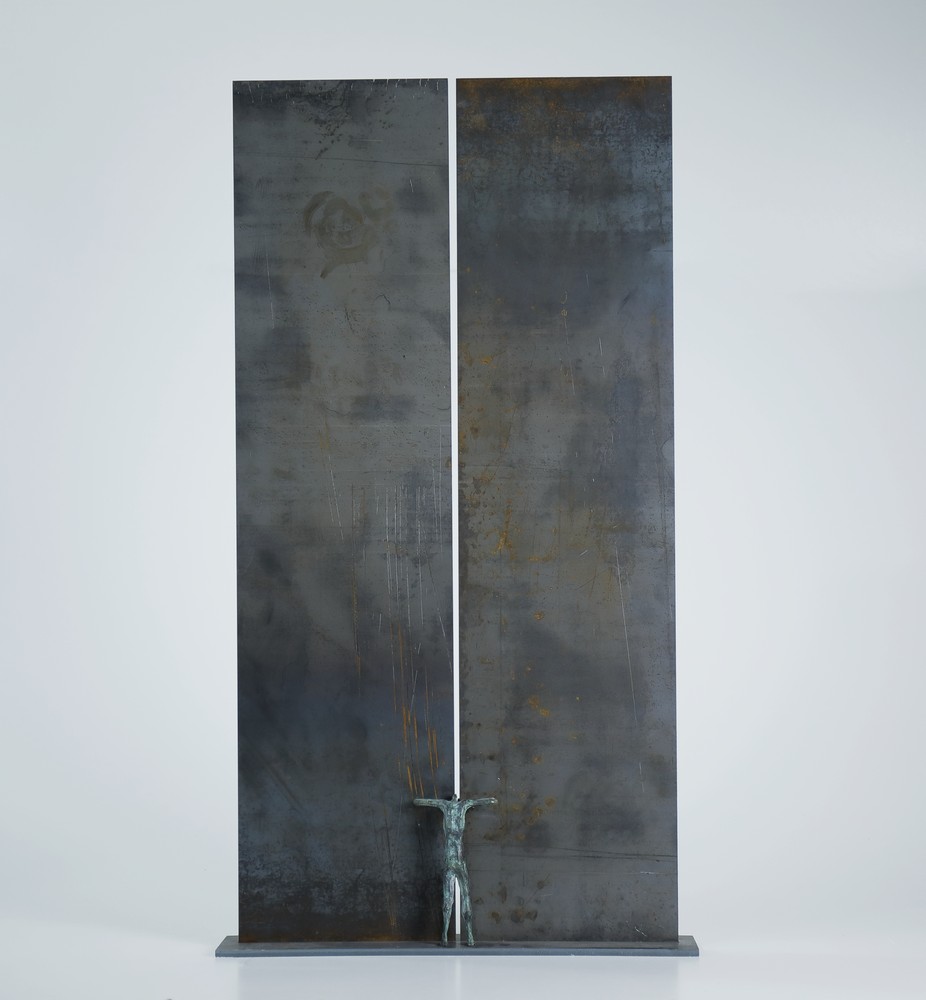
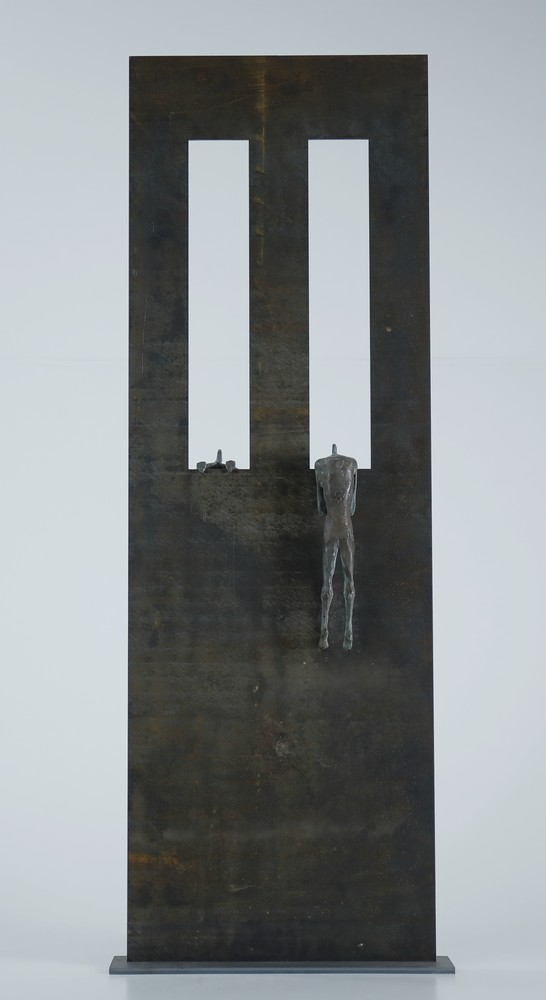
Un elemento ricorrente nella sua produzione è il movimento. Sebbene la scultura sia fisicamente statica, Tadevosyan cerca di creare l’illusione del moto, cogliendo le figure in momenti di trasformazione, tensione, equilibrio, lotta o sospensione. Le forme umane interagiscono spesso con elementi geometrici e architettonici, dando vita a relazioni visive che evocano concetti quali limite e libertà, legame e separazione, vulnerabilità e resilienza.
Le sue opere prendono spesso avvio da forme riconoscibili, per poi superare la rappresentazione letterale. Attraverso l’astrazione, la variazione delle dimensioni, la ripetizione e accostamenti inaspettati, Tadevosyan invita lo spettatore a elaborare interpretazioni personali e a stabilire un legame emotivo con le sculture. La sua ricerca si confronta con esperienze universali, quali il tempo, il cambiamento, l’aspirazione, l’identità e le forze che plasmano la vita umana.
Nato in Armenia e diplomato presso l’Accademia Statale di Belle Arti di Yerevan, Tadevosyan ha dedicato oltre un decennio allo sviluppo della propria ricerca scultorea. Come afferma lui stesso nel descrivere il suo approccio: «La mia priorità assoluta è creare un dialogo tra linee e forme capace di catturare l’attenzione e suscitare l’interesse dello spettatore».
GEVORG TADEVOSYAN
Scultore | Armenia
Dati biografici
Data e luogo di nascita: 18 novembre 1985, Vanadzor, Armenia
Nazionalità: armena
Formazione artistica
2007–2011 — Yerevan State Academy of Fine Arts, laurea in Belle Arti, indirizzo Scultura.
2002–2007 — Panos Terlemezyan Yerevan State Art College.
Mostre ed esposizioni
2026
A&A European Sculpture Park, Niemodlin, Polonia
Arcadia Sculpture Garden, Scozia, Regno Unito
Hannah Peschar Sculpture Garden, Dorking, Regno Unito
Doddington Hall and Gardens, Lincolnshire, Regno Unito
Affordable Art Fair UK, con Robertson Fine Art, Londra, Regno Unito
Himalayan Garden and Sculpture Park, Grewelthorpe, Regno Unito
9ª Chianciano Biennale, Museo d’Arte di Chianciano Terme, Italia
2025
Sculpture at Kingham Lodge, Oxfordshire, Regno Unito
London Art Biennale, Londra, Regno Unito
Spazio SV – San Vidal Exhibition Center, Venezia, Italia
2024
Sculptures in the Garden, Mudgee, Australia
8ª Chianciano Biennale, Museo d’Arte di Chianciano Terme, Italia
Castlegar Sculpture Walk, Castlegar, British Columbia, Canada
2021
Skulpturenpark Bei Wu, Wesenberg, Germania
Alma International Sculptural Park, Catalogna, Spagna
ORAQ Garden, Almaty, Kazakistan
2019
Les Jardins d’Étretat, Normandia, Francia
2017
Cascade Complex, Yerevan, Armenia
Collezione museale permanente
Museo d’Arte di Chianciano Terme, Italia.
Pubblicazioni
Visual Art Journal, n. 55, giugno 2026, Paesi Bassi.
Artist Talk, n. 45, settembre 2026, Regno Unito.
Gallerie
Gagliardi Gallery, Londra, Regno Unito.
Robertson Fine Art, Edimburgo, Scozia, Regno Unito.
Gallery Chassen, Miami, Stati Uniti.
Galerie de Nuage, New York, Stati Uniti.
Competenze linguistiche
Armeno: madrelingua.
Inglese: fluente.
Gevorg Tadevosyan. Form as Lived Experience
I discovered Gevorg Tadevosyan’s work during a recent trip to Normandy, through one of his sculptures on permanent display in the gardens of Étretat. Encountering the work firsthand, set within a landscape of extraordinary beauty, sparked my interest in his sculptural language and prompted me to explore his artistic journey in greater depth.
In Gevorg Tadevosyan’s sculpture, the human body is not a form to be reproduced according to the laws of anatomy, but an expressive material to be questioned, altered, and recomposed until it can hold an experience. The elongated figures, distorted proportions, and dialogue between masses and lines respond to a need that precedes the definition of the subject: to find a structure through which lived experience can be translated into a sculptural language.
It is significant that the artist regards sculpture as a form of translation, a passage from inner thought to a material capable of making it visible without dissipating its essence. Within this process, the recognisable figure remains a point of departure, while its configuration follows an autonomous expressive logic. The body may lose part of its anatomical integrity, become elongated, or alter its visual weight, provided that each decision serves the necessity of the form. Simplification does not impoverish the image; it concentrates its possibilities.
Movement is one of the defining aspects of this practice. In Tadevosyan’s works, bronze seems to contain an action that never reaches a definitive conclusion, as though the gesture were held within a moment of unstable equilibrium. The vitality of the figures does not depend on an overt display of dynamism, but on the distribution of mass, the extension of lines, and the relationships established between bodies. Movement is embedded in the structure itself, suggesting a before and an after without having to narrate either.
The working of bronze also contributes to the construction of meaning. Tadevosyan conceives his models with the final material already in mind, anticipating the behaviour of the surface and the role of patina. The latter is not an accessory coating: through variations in colour, differences in texture, and the distribution of light, it helps distinguish individual parts, direct the viewer’s gaze, and establish visual hierarchies. In Muse, for instance, the contrast between the more irregular surface of the male figure and the smoother finish of the female figure is reinforced by the gradation of the patina. Material thus becomes an active component of the composition.
Yet technical control does not mean a determination of every outcome. Tadevosyan accepts the unexpected when it introduces a quality capable of enriching the work, distinguishing it from anything that compromises the integrity of the form. His practice reveals a discipline that remains receptive to what emerges during the process. Experience does not eliminate uncertainty; it enables the artist to recognise when uncertainty can become a resource.
The autobiographical dimension of his sculpture further clarifies this position. “My sculptures are stories about myself,” the artist states, acknowledging a direct correspondence between his work and the situations and inner states he experiences throughout his life. This is not an attempt to construct a confessional narrative. Personal experience undergoes a process of formal elaboration that removes it from the realm of individual chronicle. Through this transformation, it can become accessible even to those who do not share the circumstances from which the work originated.
This becomes evident in the episode Tadevosyan recalls concerning Summer. Standing before the sculpture, two viewers offer different interpretations: one sees the man and woman positioned on opposite sides of the world; the other sees them on opposite sides of a world they have created together. When asked to clarify his original intention, the artist acknowledges both readings. The anecdote precisely articulates one of the central questions of his practice: a work originates in individual experience, yet its existence is not confined to that experience. The relationship between the figures, the circular structure, and the viewer’s point of view generate possibilities that no definitive explanation could exhaust.
The same principle applies to the relationship with space. Installed in a garden, a park, or an exhibition environment, a sculpture is perceived differently according to light, distance, and its surroundings. For Tadevosyan, however, the ability to engage with a particular place depends first and foremost on the work’s internal coherence. The landscape may alter its interpretation, but it cannot substitute for its intrinsic force. This distinction is particularly important when monumentality risks being confused with the mere enlargement of a form: scale acquires meaning only when sustained by an expressive necessity.
Throughout Tadevosyan’s practice, sculpture emerges as an act of understanding that evolves alongside life itself. There is no definitive language to be mastered, nor any predetermined destination. Each work records a particular state of the artist and, for that very reason, opens the possibility of further transformation. His practice finds its distinctive measure here: in the ability to entrust an authentic experience to form without imposing a single, unequivocal meaning, allowing the material to continue speaking beyond what its maker has consciously entrusted to it.
© Giuseppina Irene Groccia, 2026. All rights reserved.
I discovered Gevorg Tadevosyan’s work during a recent trip to Normandy, through one of his sculptures on permanent display in the gardens of Étretat. Encountering the work firsthand, set within a landscape of extraordinary beauty, sparked my interest in his sculptural language and prompted me to explore his artistic journey in greater depth.
Your artistic education is rooted in Armenia, where you studied at the State Academy of Fine Arts in Yerevan. How have your country’s visual culture, sculptural traditions, and the environment in which you grew up contributed to shaping your artistic vision? In what ways does this cultural heritage continue to engage with your contemporary practice?
My education at the State Academy of Fine Arts in Yerevan provided an important foundation for my development as a sculptor. Growing up and studying in Armenia introduced me to a rich cultural environment and a long artistic tradition. This heritage remains part of my background, but I see my artistic language as primarily individual rather than defined by national identity.
In my work, the human figure is a means of expressing thoughts, sensations and emotions that transcend cultural boundaries. I am interested in the human experience in its universal sense, because these thoughts, sensations and emotions do not belong solely to a particular nation or culture. They are what allow people from different backgrounds to recognize something of themselves in a work of art.
My intention is to communicate my life experiences through sculpture as directly and precisely as possible. I try to avoid pathos and unnecessary dramatization, seeking instead to express efficiently that every element’s purpose and a few essential forms together can convey something profound. For me, the strength of a sculpture lies not in exaggeration, but in its ability to express an inner experience with clarity and restraint.
My cultural heritage is an inseparable part of who I am, but I do not seek to illustrate it explicitly. It exists alongside my personal experiences and informs my perspective, while my sculptures speak a visual language that I hope can be understood and felt beyond national and cultural boundaries.
You have described sculpture as a form of thought and expression born from the interplay of line, volume, and light. Before a subject or meaning becomes recognizable, your works seem to emerge from a formal investigation that unfolds through gesture and silhouette. How does one of your sculptures actually begin? At what point does an initially undefined intuition start to acquire its own form?
I sometimes think of sculpture as a form of translation. My thoughts and feelings are my native language, while mass is another language through which I use to express them. The creative process is the translation itself: the search for a form that can convey what I feel and think without losing its essence.
I admire artists who can clearly describe their creative process. Before beginning a new sculpture, I sometimes tell myself, “concentrate, feel and try to catch that first moment when something new comes into being.” (If not for myself, at least for the interviews I might be asked to give one day!) Yet I always remember this intention only after the moment has passed.
I think both the birth of an idea and the process of giving it form remain partly beyond our grasp. We can participate in the process, follow its development and influence its direction, but we cannot fully capture the instant when it begins or explain everything that follows.
I sometimes see a parallel with the creative process of the universe itself. We can observe its unfolding, but the initial instant of creation remains beyond our comprehension. Perhaps sculpture holds something of this mystery too: we take part in bringing something into existence, yet the very beginning of that creation remains elusive, even to us.
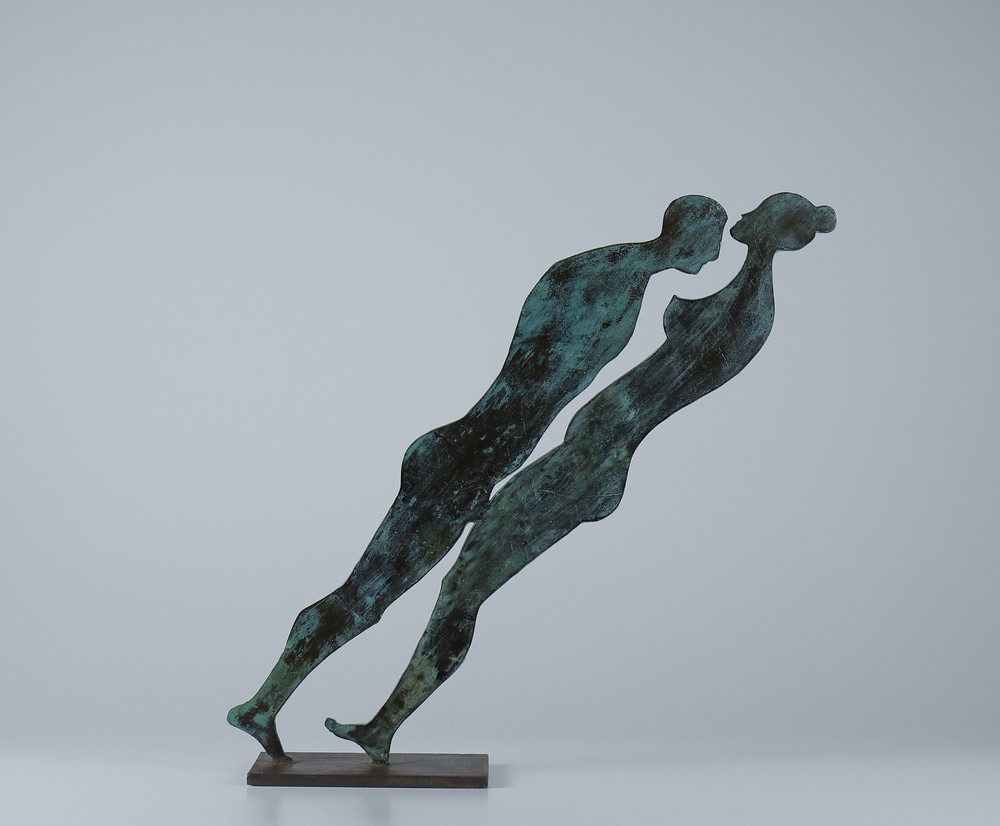
Gravitation of a woman, 50x50x10, bronze, steel
In your work, elongated figures and essential compositions often convey a remarkable sense of movement. You have identified this as one of the central challenges of your practice: bringing vitality to a form that, by its very nature, remains still. Which elements allow you to achieve this effect? And how important are the rhythm of the lines, the balance of volumes, and the surrounding space in creating this impression of movement?
I do not consciously think about the rhythm of lines or the balance of mass as separate principles. They emerge from within, as part of the process of creating each sculpture. The form itself seems to dictate how it should develop, and my task is to find the most precise way to realize it.
In this sense, I see a similarity between sculpture and writing. When a writer creates a text, they draw on everything they have read and absorbed over the years. Their vocabulary reflects their experience and personal development. I think something similar happens in sculpture: my approach to line, mass, balance and movement grows out of my accumulated experience and artistic development rather than the conscious application of specific rules. Technical knowledge is essential, but it must serve the idea rather than dominate it.
The surrounding space is equally important, particularly for sculptures displayed outdoors. In a gallery, a sculpture enters into a relationship with the walls, a nearby painting or another work on a pedestal. Outdoors, its surroundings become much broader: the sky, trees, mountains, architecture and changing light all influence how it is perceived. The position of the sun or the presence of a nearby object can transform how the sculpture is perceived.
My sculpture “Summer”, which has been installed in four different countries, is a good example of this. In each location, it looks and is perceived entirely differently. The sculpture itself remains the same, yet its relationship with the surrounding landscape and light changes.
The experience of a sculpture does not end in the studio; it continues to evolve through its relationship with the environment in which it is placed.
Your visual language brings together realism and allegory, figurative representation and formal simplification. Your figures can evoke relationships, emotional states, and collective dynamics without relying on an explicit narrative. How do you find the balance between the recognizability of the human figure and its transformation into a symbolic presence? Is there something you deliberately leave unresolved, allowing the viewer to complete the meaning of the work?
For me, the human body is a language, and like any language, it changes through use. What matters to me is not preserving the proportions of the human body, but allowing it to express fully what I want to convey.
If the composition requires the arms to be absent or the legs to be longer, I do not focus on anatomical proportions. I follow the demands of the composition, allowing the body to take whatever form is necessary to express the work as a whole.
The human body contains endless possibilities. It possesses an extraordinary plasticity that allows it to express contrasting states: fragility and solidity, strength and powerlessness, tension and calm. For me, the body is not simply a form to be represented; it is a means through which an idea or feeling can find its most precise expression.
The idea and the form develop together throughout the creative process. They are inseparable, each influencing and shaping the other as the sculpture takes form. I do not approach the figure as something that must conform to a fixed set of rules. What matters is finding the form that best serves the idea.
I do not think it is possible to make a viewer experience or understand a sculpture exactly as I did when creating it. The artist’s experience and the viewer’s experience are inevitably different. Every viewer brings their own feelings, memories and experiences to the work. This is both an inevitable part of encountering art and an important part of its value.
I cannot fully control how a viewer experiences my sculpture, nor can I expect them to feel exactly what I felt while creating it. Yet this difference does not diminish the meaning I put into the work. It allows the sculpture to become part of another person’s experience, acquiring meanings that extend beyond my original intention.
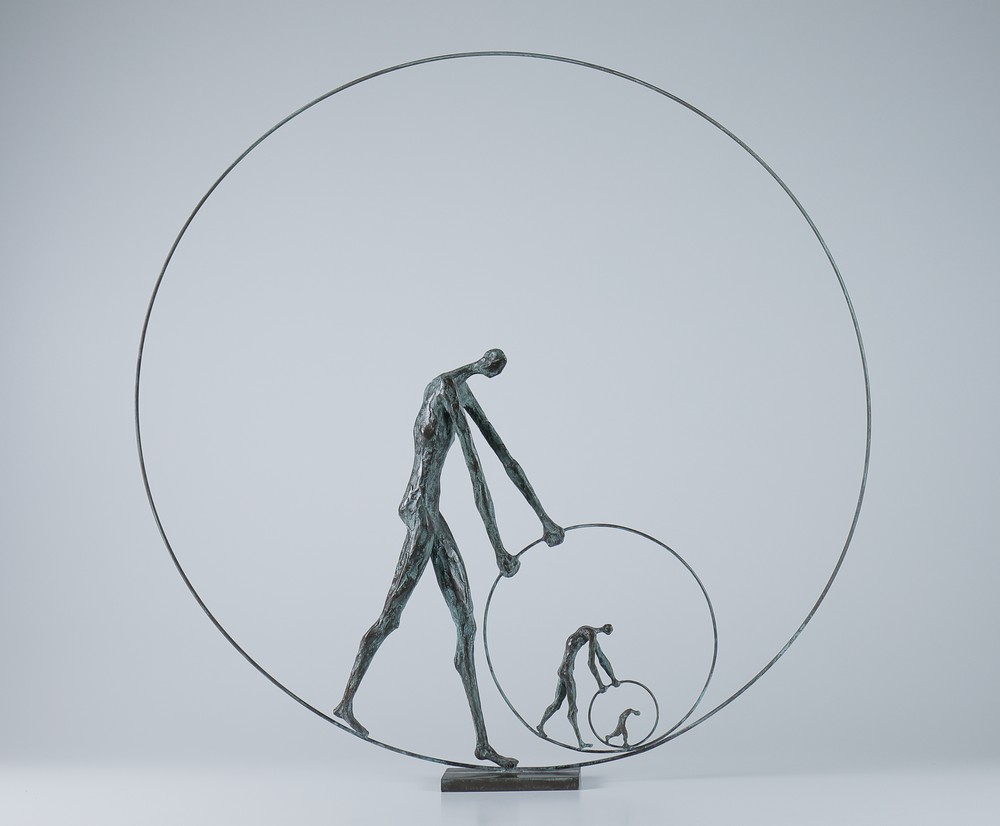
Eternity, 75x75x4, bronze, brass
Lost-wax casting involves a sequence of stages in which an idea passes through different materials and transformations, from modelling to casting, polishing, and patination. Within such an elaborate process, how much control can you retain over the final result, and to what extent do you embrace the unexpected responses of the material? Does the bronze surface, with its variations in light and texture, also preserve a trace of the creative process?
A sculptor knows which material is best suited to the form and character of a particular work. My sculptural thinking is entirely suited to bronze. Even at the initial modelling stage, when I work in modeling clay or plasticine, I already envision the sculpture in bronze.
I develop the model with the final material in mind. Where I want a particular part of the bronze to speak more strongly, I work the plasticine accordingly, giving that area greater emphasis. Where I want a form to recede into the colors of the patina, I shape the model differently, anticipating how the surface will behave in the finished sculpture.
I think of this process as similar to conducting an orchestra. The conductor determines which instrument should become more prominent, which should recede, and which should hold its place. Each has its own voice, but the aim is to bring them together into a unified composition, like a symphony. In a similar way, I work with the different parts of a sculpture so that form, surface, light and patina each play their role in the final work.
Bronze casting is, to some extent, an unpredictable process. Sometimes, for technical reasons, an unexpected volume may emerge in a particular area, or a form may become less pronounced than intended. If such a change enriches the sculpture and makes it more interesting, I am willing to accept it, even if it was not part of my original plan. However, if the result is clearly a technical flaw, I correct it, restoring the integrity of the form.
Patination is equally important to me. If it produces unexpected colors and rich tonal variations that enhance the sculpture and bring it to completion, I preserve them, even if they differ from what I had initially imagined. But if the result falls short of my intention, I repeat the process until I achieve the effect I am looking for.
I try to make the patina an active part of the sculpture rather than simply a way of changing the color of the bronze. It should contribute to the form and meaning of the work.
For example, in my sculpture “Muse”, the male figure is seated and has a more irregular surface texture, while the female figure rises into the air and has a smoother, more polished surface. When applying the patina, I made the lower part of the sculpture darker, gradually lightening the tones towards the upper figure. In this way, the patina reinforces the contrast between the two figures and becomes part of the sculpture’s overall composition.
For me, the final result emerges from the interaction between intention, material and the decisions made throughout the process. I aim to maintain control over the sculpture’s essential form and expression, while remaining open to unexpected results when they bring something valuable to the work.
Your sculptures often reflect on the human condition, exploring the relationship between individuality and belonging, closeness and isolation, balance and tension. These contrasts seem to emerge primarily through gesture and the relationships between figures, rather than through a descriptive portrayal of emotions. How do you approach these themes without turning sculpture into an overly explicit narrative? And how important is it to you that a work can generate interpretations that differ from, or even depart from, your original intentions?
My sculptures are stories about myself. They express the situations I find myself in and the emotions I experience at that particular moment.
There is not a single sculpture in which I have tried to convey one feeling while experiencing something entirely different myself. My sculptures are born from what is actually happening to me. In this sense, they are autobiographical works.
When I sculpt, I do not think about the viewer. My entire attention is focused on the process itself and on whether I have managed to express everything I wanted to say. I try to pursue the feeling or thought to its very end, until I have nothing more to express.
Even if no one were to feel anything when looking at a particular sculpture, it would still remain valuable to me if I knew that, in creating it, I had expressed myself fully, exhausting the emotion that had given rise to it.
I cannot determine what another person will see or feel in my work, nor do I try to control their interpretation. My responsibility is to be honest with what I experience and to give it the fullest expression I can. What happens afterwards, when the sculpture encounters another person, belongs to a different part of its existence.
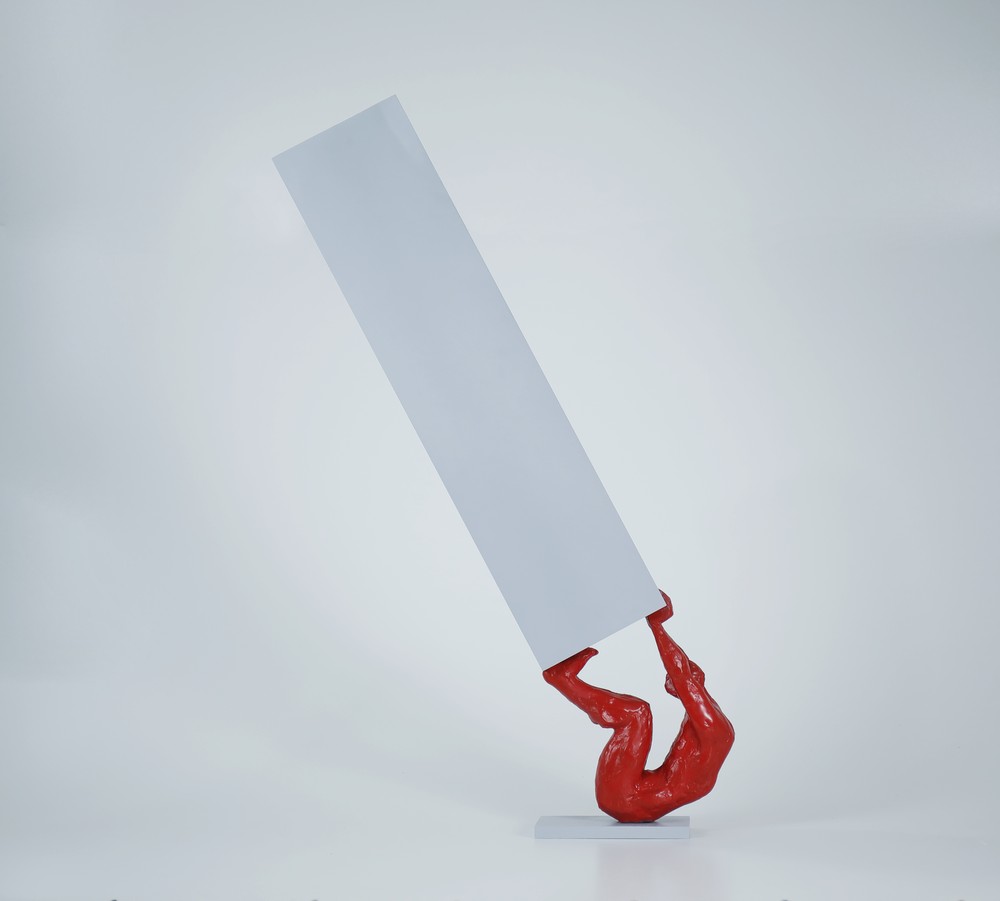
Disbalance, 97x60x10, bronze, aluminium
Works such as Summer suggest that the relationship between figures extends beyond their physical presence to encompass the space they share and the movement that seems to pass through them. In a circular composition, the relationship between the bodies and the overall form can itself become a narrative. When developing a work of this kind, do you begin with the individual figures or with the relationship that will connect them? And how does a sculpture’s meaning change when viewers can experience it from multiple perspectives by moving around it?
During that period, I was primarily interested in compositions built around male and female figures, exploring their similarities and differences. I use mass to express the difference, one as a symbol of lightness and the other as a symbol of weight or heaviness. I was interested in the relationship between these contrasting qualities and how they could be brought together within a single composition.
“Summer” belongs to that period and is one of the works in my Seasons series. Like my other work, it grew out of personal experiences and my attempt to express them through sculpture.
For me, the relationship between the figures is inseparable from the overall composition. I do not see them simply as separate, individual bodies placed together, but as elements of a unified form in which each figure influences the perception of the other.
The way viewers experience a sculpture from different perspectives can reveal interpretations that I may not have consciously considered myself. I remember an incident from when “Summer” was first installed. I used to visit the sculpture frequently and spend time looking at it. One day, I was standing nearby while several people were discussing the work. One person said, “I think the sculptor has depicted this world, with the man and woman standing on opposite sides of it.” Another replied, “I think this is the world they themselves have created, and they have ended up on opposite sides of it.” Then one of them turned to me and asked, “What do you think the artist intended to say?” I answered, “I’m sure the artist would agree with both of you.”
I believe that a sculpture can contain possibilities beyond a single interpretation. The artist brings something personal to the work, but once it enters the world, viewers bring their own experiences, perspectives and ways of seeing to it. Their interpretations can reveal dimensions of the sculpture that were not part of my conscious intention, yet still belong, naturally, to the work.
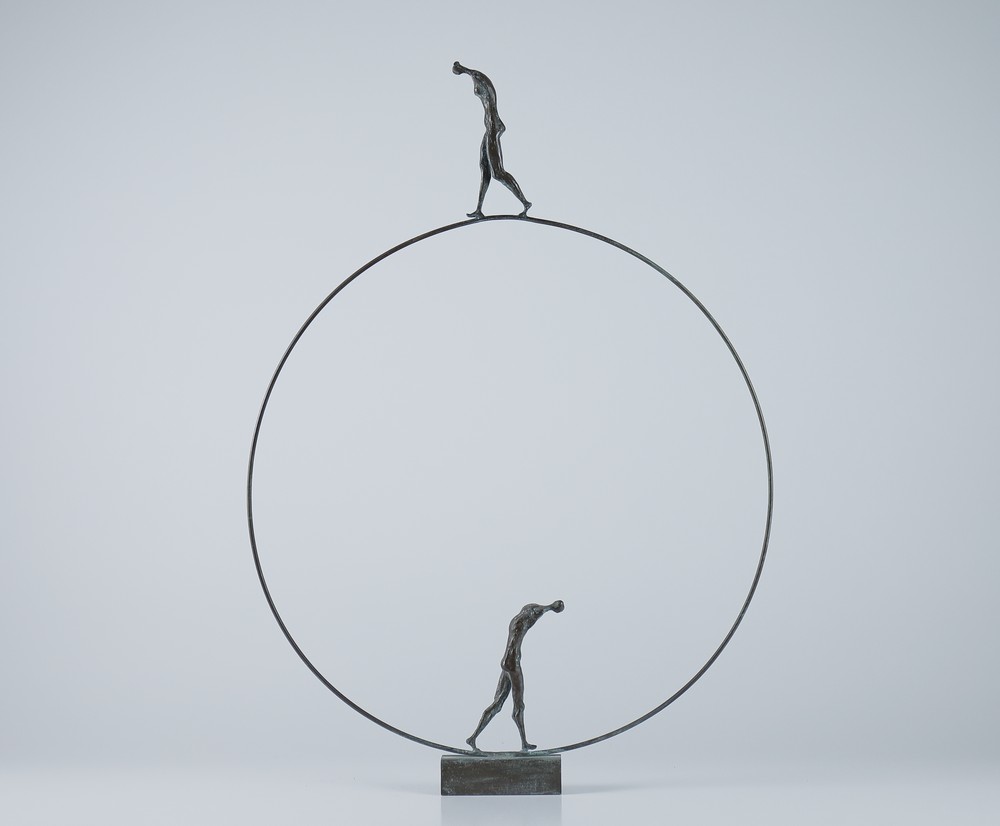
Summer, 58x45x3, bronze, brass
Your works have been presented in a wide variety of settings, from international sculpture gardens and parks to exhibition spaces and museum collections. A sculpture placed in a natural environment is shaped in its perception by changing light, the seasons, distance, and the presence of people; in a museum, the relationship with the viewer develops under different conditions. How much does a location influence the conception of a sculpture? Do you regard landscape and architecture as mere settings, or as active elements that contribute to the work’s interpretation?
When creating a sculpture, it is impossible to imagine exactly what environment it will eventually inhabit or how it will be perceived there.
I believe that if a sculpture is fully realized and expresses its idea with all its strength, it will tend to influence its surroundings more than be shaped by them. Of course, the same sculpture is perceived differently in different environments. Yet what remains memorable is the force that comes from the sculpture itself, rather than the force that the environment lends to it.
This is as natural as it is in human relationships. We cannot control or predict how the same person will be perceived in different circumstances. A color also changes its effect depending on what surrounds it: yellow has one resonance against a red canvas, another against white, and yet another against black. The yellow itself remains the same, but its perception changes through its relationship with the surrounding colors.
The same is true of a person. A philosopher surrounded by devoted students is one person, while that same philosopher, surrounded by grandchildren at home, appears to be someone else. Yet in both situations, the person remains the same.
For a sculpture placed outdoors, this relationship becomes more complex. Nature is already a complete and harmonious whole. The sky, mountains and fields exist in a balance that we, as sculptors, cannot improve upon. If a sculpture does not feel right in such a setting, the problem lies in the sculpture itself, not in nature.
I believe that achieving harmony with nature is possible only when the artist remains in their natural state, true to who they are, as simple and harmonious as nature itself. If an artist feels one thing but creates something else, the work will not belong to that environment; it will remain disconnected from it.
For me, this is not simply a question of placing a sculpture in the right location. It is a question of whether the work has emerged from an authentic inner experience. When it has, it can enter into a natural relationship with its surroundings without losing its own identity.
Alongside your sculptural practice, your work on stage sets for theatre, opera, and ballet, together with your teaching experience, offers an intriguing dialogue between different artistic languages. Theatre is shaped by movement, light, time, and presence, while sculpture seems to resist the flow of time, even as it can evoke its passage. How have these experiences influenced your understanding of space, gesture, and the physical presence of forms? Have you ever recognized in one of your sculptures a quality that emerged specifically from this dialogue with the world of stage design?
I do not think my work at the Opera Theatre has left a direct or immediately visible trace in my sculpture. Although these disciplines share certain qualities, they remain fundamentally different creative practices.
Working on a large stage, creating sets and structures reaching six meters in height, was certainly a valuable experience. Yet there is a fundamental difference between creating a six-meter stage element and making a six-meter sculpture. In sculpture, size alone is not enough to give a work presence or strength. If a sculpture does not possess an inner force, enlarging it will not give it that force. Monumental scale cannot compensate for what is absent within the work itself.
Working with children has been a valuable experience. I have often been struck by their courage and freedom, by the way they immerse themselves in the act of creating without being preoccupied with the final result. They are absorbed in the process itself, doing what they feel compelled to do, without the hesitation and self-consciousness that can develop with experience.
When I return to my studio, I return to my own starting point. It is almost as if I put aside a garment: both the experience gained at the Opera Theatre and the spontaneity I encounter when working with children remain outside the studio door.
I return to my natural state, where the relationship between myself and the work that is about to emerge begins anew. It is an indescribable relationship, one that cannot be replaced by acquired experience or consciously applied methods.
Another element in my process is the 20+ years of experience, in both the creative process and technical. Perhaps this is the most important distinction for me however, is that the experience enriches us, but the creation of a sculpture requires something more fundamental the ability to return to oneself and remain true to one’s own inner state.
You have stated that you do not wish to confine your practice to a specific theme, allowing the harmony of forms to precede the definition of the subject. This approach suggests an openness towards creation, as well as a continuous willingness to question and challenge yourself. Looking back on your artistic journey so far, which aspects of your visual language do you feel have undergone the greatest transformation, and which remain unexplored? Is there an artistic question to which you have not yet found an answer, but which continues to guide your work?
For me, the creative process is so closely connected to my life and everyday existence that it is impossible to separate it from them and assess it independently. Perhaps the process of creating is much more natural than any attempt to describe it.
Descartes famously wrote, “I think, therefore I am.” If I were to extend this thought in my own way, I would say: if I am, then I create. Creation is inseparable from living. Just as life becomes creation, creation itself becomes a way of living.
My sculpture has changed as much as I have changed, and it will continue to change with me for as long as I live. For me, this is the only true measure of artistic development. It is impossible to experience the same thing in exactly the same way at different stages of life. Even the books we love reveal different layers of meaning to us as we grow older and our experiences change.
I do not think of my artistic journey as a progression towards a clearly defined destination. Rather, my work continues to evolve alongside me, shaped by the person I become and by the experiences through which I live. What remains unexplored is inseparable from what I have yet to experience in life itself.
Perhaps this is why I do not feel the need to define a single artistic question that guides all my work. Each sculpture emerges from a particular moment in my life, from something I experience and feel at that time. As I change, so does the work. The questions may change with me, and some may never find a final answer. I see this not as a limitation, but as a natural part of remaining alive and continuing to create.
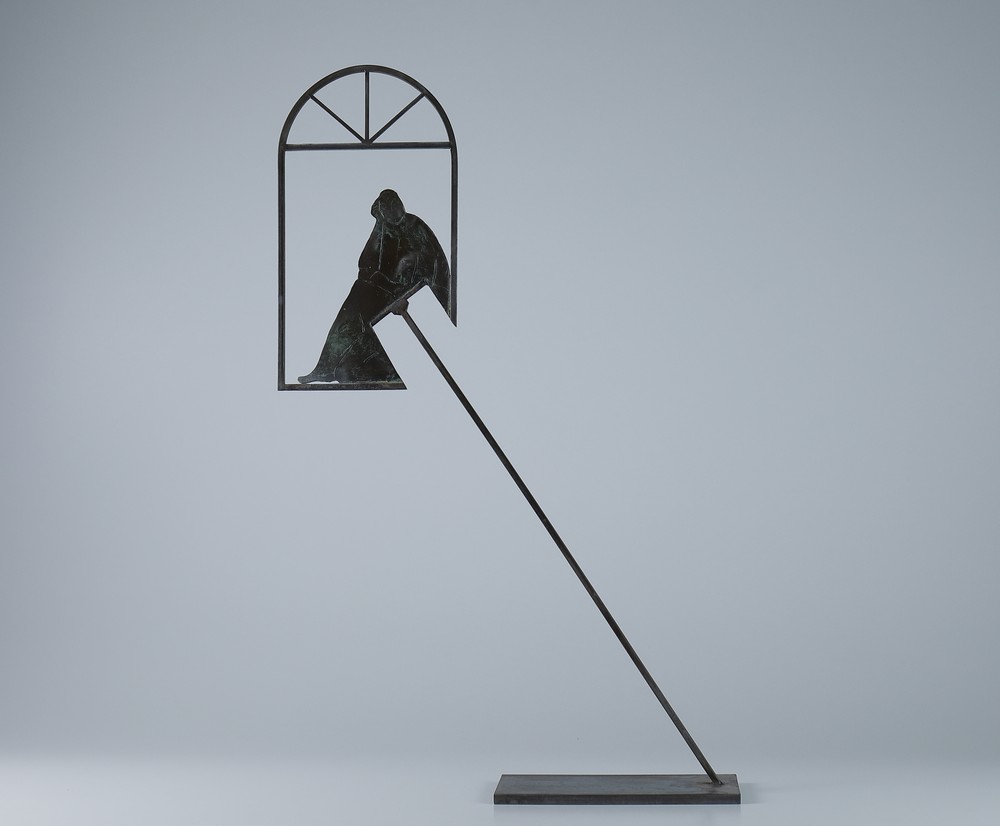
Gevorg Tadevosyan is a sculptor whose practice explores the human experience through the interplay of figure, movement, structure, and form. Working primarily in bronze, steel and brass, he combines realism and allegory to create sculptures that range from intimate figurative works to monumental indoor and outdoor installations.
A recurring element in Tadevosyan’s work is movement. Although sculpture is physically static, he seeks to create the illusion of motion—capturing figures in moments of transformation, tension, balance, struggle, or suspension. Human forms frequently interact with geometric and architectural elements, creating visual relationships that suggest ideas of limitation and freedom, connection and separation, vulnerability and resilience.
His works often begin with recognizable forms but move beyond literal representation. Through abstraction, scale, repetition, and unexpected juxtapositions, Tadevosyan invites viewers to discover their own interpretations and emotional connections. His sculptures engage with universal experiences—time, change, aspiration, identity, and the forces that shape human life.
Born in Armenia and a graduate of the Yerevan State Academy of Fine Arts, Tadevosyan has devoted more than a decade to developing his sculptural practice. As he describes his approach: “My top priority is to create a conversation between the lines and forms that captivates and interests the viewer.”
GEVORG TADEVOSYAN
Sculptor | Armenia
PERSONAL INFORMATION
Date and Place of Birth: November 18, 1985 — Vanadzor, Armenia
Nationality: Armenian
Phone: +374 43810351
Email: tadevosyang@gmail.com
EDUCATION
2007–2011
Yerevan State Academy of Fine Arts
Bachelor of Arts in Sculpture
2002–2007
Panos Terlemezyan Yerevan State Art College
EXHIBITIONS
2026
A&A European Sculpture Park, Niemodlin, Poland
Arcadia Sculpture Garden, Scotland, United Kingdom
Hannah Peschar Sculpture Garden, Dorking, United Kingdom
Doddington Hall and Gardens, Lincolnshire, United Kingdom
Affordable Art Fair UK, with Robertson Fine Art, London, United Kingdom
Himalayan Garden and Sculpture Park, Grewelthorpe, United Kingdom
9th Chianciano Biennale, Museo d’Arte di Chianciano Terme, Italy
2025
Sculpture at Kingham Lodge, Oxfordshire, United Kingdom
London Art Biennale, London, United Kingdom
Spazio SV – San Vidal Exhibition Center, Venice, Italy
2024
Sculptures in the Garden, Mudgee, Australia
8th Chianciano Biennale, Museo d’Arte di Chianciano Terme, Italy
Castlegar Sculpture Walk, Castlegar, British Columbia, Canada
2021
Skulpturenpark Bei Wu, Wesenberg, Germany
Alma International Sculptural Park, Catalonia, Spain
ORAQ Garden, Almaty, Kazakhstan
2019
Les Jardins d’Étretat, Normandy, France
2017
Cascade Complex, Yerevan, Armenia
PERMANENT MUSEUM COLLECTION
Museo d’Arte di Chianciano Terme, Italy
PUBLICATIONS
Visual Art Journal, Issue No. 55, June 2026, Netherlands
Artist Talk, Issue No. 45, September 2026, United Kingdom
GALLERIES
Gagliardi Gallery, London, United Kingdom
Robertson Fine Art, Edinburgh, Scotland, United Kingdom
Gallery Chassen, Miami, USA
Galerie de Nuage, New York, USA
LANGUAGE SKILLS
Armenian: Native
English: Fluent